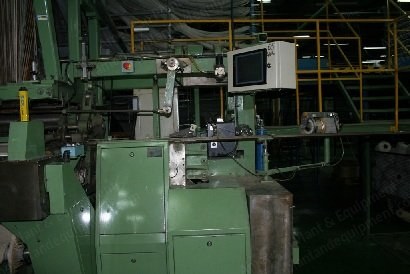
Weaving efficiencies (hour to hour) between 70% and 80%
This figure will depend on the following variables: correct tubing and creeling sequence, proper pile yarn quality, proper weft and warp yarn quality, knotless yarns, tuner / weaver / creeler skill and aptitude, proper utility services to loom and jacquard
Production efficiencies (month to month): up to 80% of weaving efficiency figure
This figure will depend on the following variables: actual weaving efficiencies achieved, frequency and duration of creel changing, frequency and duration of pattern changing, frequency and duration of warp beam changing, time spent for maintenance / cleaning and other downtime
Loom B
Year: 2001
Number of colours: 12 colours
Loom size (working width): 4 meter
Reed densities: 7 pitch / inch, 276 pitch / meter
Linear qualities: 4 rows / inch to 14+ rows / inch, 160 rows / meter to 550+ rows / meter
Pile length at draw off: 0.6875 in to 1.375, 17.5 mm to 35 mm
Tuft length (pile above backing corinthian weave): 0.25 in to 0.60, 6 mm to 15 mm
Weaving efficiencies (hour to hour) between 70% and 80%
This figure will depend on the following variables: correct tubing and creeling sequence, proper pile yarn quality, proper weft and warp yarn quality, knotless yarns, tuner / weaver / creeler skill and aptitude, proper utility services to loom and jacquard
Production efficiencies (month to month): up to 80% of weaving efficiency figure
This figure will depend on the following variables: actual weaving efficiencies achieved, frequency and duration of creel changing, frequency and duration of pattern changing, frequency and duration of warp beam changing, time spent for maintenance / cleaning and other downtime
Request a Quote
✓
Request sent
Thank you, our team will reply to you shortly.
Direct access to our team
Email American Plant & Equipment
Tell us what you want to buy, source, finance, or sell. A machinery specialist will follow up with you.
✓
Thank you. Your request is with the American Plant and Equipment team.
A machinery specialist will follow up with you.
Machinery updates
Subscribe to our email list
Tell us which industries you follow and we will send you the machines that match.
✓
You are on the list.
We will email you when machines that match your interests come in. Unsubscribe from any message.