
Search results for: 'air con'
- Related search terms
- condi
- control+pr
- cont'
- Air'
- cont'''
-
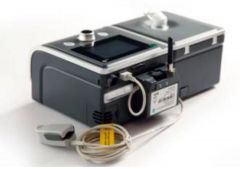 T-6575 NON-INVASIVE VENTILATOR
NON-INVASIVE VENTILATOR
Learn More
CERTIFICATE: CE
MEDICAL VENTILATOR
TECHNICAL PARAMETERS OF DOUBLE LEVEL VENTILATOR
VENTILATOR TYPE: ELECTRIC CONTROL
SCOPE OF APPLICATION: TREATMENT AND TITRATION OF SLEEP APNEA HYPOPNEA SYNDROME, SEVERE SNORING, AND RESPIRATORY INSUFFICIENCY.
DISPLAY INTERFACE: 3.5-INCH LED SCREEN, CHINESE OPERATING SYSTEM
*VENTILATION MODE: CPAP, S, S/T, T
PRESSURE RANGE:
PRESSURE RANGE: 4-30CMH2O (±0.5CMH2O)
PRESSURE ACCURACY: + 0.5CMH2O
PARAMETER SETTING:
DELAYED BOOST: 0-60MIN, SET THE DIVISION INTERVAL 5MIN
INITIAL PRESSURE: 4CMH2O TREATMENT PRESSURE / RESPIRATORY PRESSURE SETTING
THERAPEUTIC PRESSURE: 4-20CMH2O (IN CPAP MODE)
TARGET TIDAL VOLUME: 150ML - 1500ML, ON/ OFF
MAXIMUM SUCTION PRESSURE: 4-30CMH2O, (CAN BE SET WHEN THE TARGET TIDAL VOLUME FUNCTION IS ON)
MINIMUM SUCTION PRESSURE: 4-30CMH2O (NOT HIGHER THAN THE SUCTION PRESSURE), (CAN BE SET WHEN THE TARGET TIDAL VOLUME FUNCTION IS ON)
INSPIRATORY PHASE PRESSURE: 4-30CMH2O
EXPIRATORY PRESSURE: 4-30CMH2O
EXPIRATORY DECOMPRESSION: PATIENT, OFF, 1-3, THREE ADJUSTABLE
MANUAL VOLTAGE REGULATION: 0-2 GEAR, 0-2CMH2O (ONLY AVAILABLE IN CPAP MODE)
INSPIRATORY SENSITIVITY: 1-8 STALLS
EXPIRATORY SENSITIVITY: 1-8 STALLS
RESPIRATORY FREQUENCY: 3-40 TIMES / MIN
INSPIRATORY TIME: 0.3-3.0S
BACKUP RATE: ON / OFF, DEFAULT 10
PRESSURE RISE TIME: 1-4 STALLS
HUMIDIFIER: 1-5 ADJUSTABLE IN 5 GEARS
*TITRATION FUNCTION: SUPPORT MANUAL AND AUTOMATIC PRESSURE TITRATION, BUILT-IN REMOTE WIRELESS COMMUNICATION MODULE, COMPLETE THE RANDOM SWITCHING OF SINGLE AND DOUBLE LEVEL MODES IN THE TITRATION PROCESS, AND CONTROL MORE THAN 11 VENTILATOR PARAMETERS AT THE SAME TIME.
AUXILIARY FUNCTION: AUTOMATIC AIR LEAKAGE COMPENSATION, AUTOMATIC STARTUP, AUTOMATIC SHUTDOWN, DELAYED SHUTDOWN, SCREEN BACKLIGHT ADJUSTMENT
MONITORING PARAMETERS: PRESSURE, TIDAL VOLUME, RESPIRATORY RATE, MINUTE VENTILATION VOLUME, AIR LEAKAGE VOLUME, INSPIRATORY TIME, BLOOD OXYGEN SATURATION
WAVY CURVE: PRESSURE TIME WAVEFORM, FLOW RATE TIME WAVEFORM
ALARM PROMPT: PIPELINE AND MASK FALLING OFF, AIR LEAKAGE PROMPT, POWER INTERRUPTION, TREATMENT MACHINE FAILURE, HUMIDIFIER FAILURE, LOW VOLTAGE, HIGH RESPIRATORY RATE, LOW RESPIRATORY RATE, LOW MINUTE VENTILATION VOLUME, LOW BLOOD OXYGEN, REPLACEMENT OF FILTER COTTON, FULL SD CARD, RE INSERTION OF SD CARD
*DATA MANAGEMENT:
NETWORK DATA: BMC + RESPIRATORY HEALTH MANAGEMENT CLOUD PLATFORM
SD CARD DATA: RESART NPAP DATA ANALYSIS SOFTWARE
PARTS:
SD CARD: STANDARD
SD CARD SLOT: STANDARD
PIPING: 9 22MM, 1.8M LONG
FACE SHIELD: F2 NOSE MASK AS STANDARD
NOISE: LESS THAN 30DB
ENVIRONMENT CONDITION:
TEMPERATURE:
(WHEN USED) 5 -35 C
(DURING TRANSPORTATION AND STORAGE) -20 C -55 C
ATMOSPHERIC PRESSURE:
(WHEN USED) 760-1060HPA
(DURING TRANSPORTATION AND STORAGE) 760-1060HPA
WORKING HOURS: MORE THAN 8 HOURS
POWER SUPPLY REQUIREMENTS:
AC VOLTAGE: 100-240V
FREQUENCY: 50HZ/60HZ
INPUT POWER: LESS THAN 2A
WATERPROOF LEVEL: IP22 - DRIP PROOF EQUIPMENT
INSTRUMENT SIZE: 290mm X 180mm X 134mm
WEIGHT: 1.5KG (EXCLUDING HUMIDIFIER) 2.5KG (INCLUDING HUMIDIFIER)
ITEM 001
QUANTITY: 10 SETS-999 SETS
ITEM 002
QUANTITY: 1,000 SETS-9,999SETS
ITEM 003
QUANTITY: ≥10,000 SETS -
 D-2388 What’s the Best Material for a Mask?
Federal health officials have now recommended that we cover our faces with fabric during the coronavirus pandemic. But what material offers the most protection?
The Centers for Disease Control and Prevention has posted a no-sew mask pattern using a bandanna and a coffee filter as well as a video on making masks using rubber bands and folded fabrics found at home.
While a simple face covering can reduce the spread of coronavirus by blocking outgoing germs from coughs or sneezes of an infected person, experts say there is more variation in how much homemade masks might protect the wearer from incoming germs, depending on the fit and quality of the material used.
Scientists around the country have taken it upon themselves to identify everyday materials that do a better job of filtering microscopic particles. In recent tests, HEPA furnace filters scored well, as did vacuum cleaner bags, layers of 600-count pillowcases and fabric similar to flannel pajamas. Stacked coffee filters had medium scores. Scarves and bandanna material had the lowest scores, but still captured a small percentage of particles.
If you don’t have any of the materials that were tested, a simple light test can help you decide whether a fabric is a good candidate for a mask.
“Hold it up to a bright light,” said Dr. Scott Segal, chairman of anesthesiology at Wake Forest Baptist Health who recently studied homemade masks. “If light passes really easily through the fibers and you can almost see the fibers, it’s not a good fabric. If it’s a denser weave of thicker material and light doesn’t pass through it as much, that’s the material you want to use.”
Researchers say it’s important to remember that lab studies are conducted under perfect conditions with no leaks or gaps in the mask, but the test methods give us a way to compare materials. And while the degree of filtration for some homemade masks seems low, most of us — who are staying home and practicing social distancing in public — don’t need the high level of protection required for medical workers. More important, any face covering is better than none, especially if worn by a person who has the virus but doesn’t know it.
The biggest challenge of choosing a homemade mask material is to find a fabric that is dense enough to capture viral particles, but breathable enough that we can actually wear it. Some items being touted online promise high filtration scores, but the material would be unwearable.
Dressing Up for Work … at Home
Yang Wang, an assistant professor of environmental engineering at Missouri University of Science and Technology, worked with his graduate students to study various combinations of layered materials — including both air filters and fabric. “You need something that is efficient for removing particles, but you also need to breathe,” said Dr. Wang, who last fall won an international award for aerosol research.To test everyday materials, scientists are using methods similar to those used to test medical masks, which everybody agrees should be saved for medical workers who are exposed to high doses of virus from seeing infected patients. The best medical mask — called the N95 respirator — filters out at least 95 percent of particles as small as 0.3 microns. By comparison, a typical surgical mask — made using a rectangular piece of pleated fabric with elastic ear loops — has a filtration efficiency ranging from 60 to 80 percent.
Dr. Wang’s group tested two types of air filters. An allergy-reduction HVAC filter worked the best, capturing 89 percent of particles with one layer and 94 percent with two layers. A furnace filter captured 75 percent with two layers, but required six layers to achieve 95 percent. To find a filter similar to those tested, look for a minimum efficiency reporting value (MERV) rating of 12 or higher or a microparticle performance rating of 1900 or higher.
The problem with air filters is that they potentially could shed small fibers that would be risky to inhale. So if you want to use a filter, you need to sandwich the filter between two layers of cotton fabric. Dr. Wang said one of his grad students made his own mask by following the instructions in the C.D.C. video, but adding several layers of filter material inside a bandanna.
Dr. Wang’s group also found that when certain common fabrics were used, two layers offered far less protection than four layers. A 600 thread count pillow case captured just 22 percent of particles when doubled, but four layers captured nearly 60 percent. A thick woolen yarn scarf filtered 21 percent of particles in two layers, and 48.8 percent in four layers. A 100 percent cotton bandanna did the worst, capturing only 18.2 percent when doubled, and just 19.5 percent in four layers.
The group also tested Brew Rite and Natural Brew basket-style coffee filters, which, when stacked in three layers, showed 40 to 50 percent filtration efficiency — but they were less breathable than other options.
If you are lucky enough to know a quilter, ask them to make you a mask. Tests performed at the Wake Forest Institute for Regenerative Medicine in Winston-Salem, N.C., showed good results for homemade masks using quilting fabric. Dr. Segal, of Wake Forest Baptist Health, who led the study, noted that quilters tend to use high-quality, high-thread count cotton. The best homemade masks in his study were as good as surgical masks or slightly better, testing in the range of 70 to 79 percent filtration. Homemade masks that used flimsier fabric tested as low as 1 percent filtration, Dr. Segal said.
The best-performing designs were a mask constructed of two layers of high-quality, heavyweight “quilter’s cotton,” a two-layer mask made with thick batik fabric, and a double-layer mask with an inner layer of flannel and outer layer of cotton.
Bonnie Browning, executive show director for the American Quilter’s Society, said that quilters prefer tightly woven cottons and batik fabrics that stand up over time. Ms. Browning said most sewing machines can handle only two layers of fabric when making a pleated mask, but someone who wanted four layers of protection could wear two masks at a time.
Ms. Browning said she recently reached out to quilters on Facebook and heard from 71 people who have made a combined total of nearly 15,000 masks. “We quilters are very much in the thick of what’s going on with this,” said Ms. Browning, who lives in Paducah, Ky. “One thing most of us have is a stash of fabric.”
People who don’t sew could try a folded origami mask, created by Jiangmei Wu, assistant professor of interior design at Indiana University. Ms. Wu, who is known for her breathtaking folded artwork, said she began designing a folded mask out of a medical and building material called Tyvek, as well as vacuum bags, after her brother in Hong Kong, where mask wearing is common, suggested it. (DuPont, the maker of Tyvek, said in a statement that Tyvek is intended for medical apparel, not masks.) The folded mask pattern is free online, as is a video demonstrating the folding process. In tests at Missouri University and University of Virginia, scientists found that vacuum bags removed between 60 percent and 87 percent of particles. But some brands of vacuum bags may contain fiberglass or are harder to breathe through than other materials, and shouldn’t be used. Ms. Wu used a bag by EnviroCare Technologies, which has said it does not use fiberglass in its paper and synthetic cloth bags.
“I wanted to create an alternative for people who don’t sew,” said Ms. Wu, who said she is talking to various groups to find other materials that will be effective in a folded mask. “Given the shortage of all kinds of materials, even vacuum bags might run out.”
The scientists who conducted the tests used a standard of 0.3 microns because that is the measure used by the National Institute for Occupational Safety and Health for medical masks.
Linsey Marr, a Virginia Tech aerosol scientist and an expert in the transmission of viruses, said the certification method for respirators and HEPA filters focuses on 0.3 microns because particles around that size are the hardest to catch. While it seems counterintuitive, particles smaller than 0.1 microns are actually easier to catch because they have a lot of random motion that makes them bump into the filter fibers, she said.
“Even though coronavirus is around 0.1 microns, it floats around in a wide range of sizes, from around 0.2 to several hundred microns, because people shed the virus in respiratory fluid droplets that also contain lots of salts and proteins and other things,” said Dr. Marr. “Even if the water in the droplets fully evaporates, there’s still a lot of salt and proteins and other gunk that stays behind as solid or gel-like material. I think 0.3 microns is still useful for guidance because the minimum filtration efficiency will be somewhere around this size, and it’s what NIOSH uses.”
Learn More -
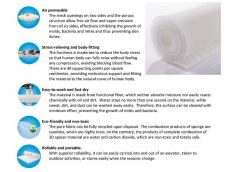 HPFJ-1111 POLYMAT FOR UPHOLSTERY, MATTRESS TOPPERS, MATS AND SEAT CUSHIONS
• Air permeable
The mesh openings on two sides and the porous structure allow free air flow and vapor emission from all six sides, effectively inhibiting the growth of molds, bacteria and mites and thus preventing skin itches.• Stress-relieving and body-fitting
The hardness is moderate to reduce the body stress so that human body can fully relax without feeling any compression, avoiding blocking blood flow. There are 40 supporting points per square centimeter, providing meticulous support and fitting the material to the natural curve of human body.• Easy-to-wash and fast-dry
The material is made from functional fiber, which neither absorbs moisture nor easily reacts chemically with oil and dirt. Water stays no more than one second on the material, while sweat, dirt, and dust can be washed away easily. Therefore, the surface can be cleaned with minimum effort, preventing the growth of mites and bacteria.• Eco-friendly and non-toxic
The pure fabric can be fully recycled upon disposal. The combustion products of sponge are cyanides, which are highly toxic; on the contrary, the products of complete combustion of 3D spacer material are water and carbon dioxide, which are non-toxic and totally safe.• Rollable and portable.
With superior rollability, it can be easily carried into and out of an elevator, taken to outdoor activities, or stores easily when the seasons change.
Learn More
CONSTRUCTED OF 100% POLYESTER
FEATURES: AIR-PERMEABLE, WATER-PERMEABLE, ECO-FRIENDLY, NON-TOXIC, 100% RECYCLED, ANTI-STATIC, ANTI-MITE, ELASTIC, FLAME-RETARDANT, ETC.
NET “X” STRUCTURE
FOR UPHOLSTERY, MATTRESS TOPPERS, MATS, SEAT CUSHIONS, ETC.
NO# NAME LENGTH x WIDTH DIMENSIONS APPROX. INCHES THICKNESS
1 CUSHION 450x450mm 17.7 x 17.7 8 INCHES
2 BABY BED 600x1200mm 23.6 x 47.2 8 INCHES
3 STUDENT BED 1000x2000mm 39.3 x 78.7 8 INCHES
4 1.2 METER BED 1200x2000mm 47.2 x 78.7 8 INCHES
5 1.5 METER BED 1500x2000mm 59 x 78.7 8 INCHES
6 1.8 METER BED 1800x2000mm 70.8 x 78.7 8 INCHES
7 QUEEN BED 1524 x 2032mm 60 x 80 8 INCHES -
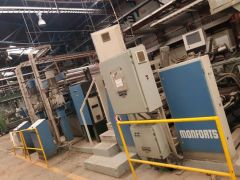 L-5934 MONFORTS 6-F TWIN AIR STENTER YEAR 2003 – WORKING WIDTH 2400mm
REFERENCE NUMBER: L-5934
MONFORTS 6-F TWIN AIR STENTER YEAR 2003 – WORKING WIDTH 2400mm
STENTER
RAMA MONFORTS
MAKE: MONFORTS
MODEL: 6-F TWIN
YEAR: 2003
440 VAC 60HZ
NATURAL GAS
AIR COMPRESSOR 7 BAR
QUANTITY: 1
Learn More -
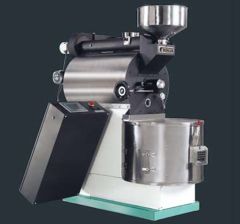
 P-5090 JOPER CAST IRON ROASTER 60 KILOS
P-5090 JOPER CAST IRON ROASTER 60 KILOS
ONE BAG ROASTING – WORLDWIDE FAVORITE SINCE MOST OF THE COFFEE BAGS IN THE WORLD ARE 60 KILO. NOW THIS IS NOT AN EXCUSE TO AVOID SILO MANAGEMENT OF THE COFFEE BEANS - AS COFFEE STORED IN SILOS ENJOY A UNIVERSAL MOISTURE CONTENT WHERE LEAVING IT IN BAGS WILL GIVE YOU MOISTURE ALL OVER THE PLACE - SO THINK SILOS AS PART OF YOUR PLANT. NOW TO THE ACTUAL ROASTER BEING A VERY RUGGED CAST IRON ROASTING FRAME AND ROASTING DRUM CONTACT-CLEARANCES WITH THAT SOLID FRAME MAKING IT JUST PLAIN SOLID AND DOES NOT MOVE UNDER LONG OR EXTENDED USE. DOUBLE WALL DRUM MEANS THAT THE HEAT IS ALL DESIGNED TO GO THROUGH THE CENTER OF THE ROASTING CHAMBER, NOT "ONTO" THE DRUM EXTERIOR. TOTAL TRUE CONVECTION. NOT ONLY IS THIS THE SAME STYLE FROM THE OLD GOTHOT & BARTH ROASTER DAYS. . . BUT EVEN BETTER AS THE SHAFT DESIGN SO THAT BEARINGS ARE EXTERNALLY MOUNTED AND ADDITIONALLY ARE AIR COOLED FOR LONG LIFE AND TROUBLE-FREE CONTROL. EVEN THE SIDE PANELS OR PRODUCT FLIGHTS HAVE A LONGER CURVE POSITIONING THAT ALLOWS FOR MORE PRODUCT FLOW INTO THE HOT AIR STREAM, RESULTING IN A SLIGHTLY MORE RAPID ROAST WITH MORE EVEN BEAN INTERIOR AND EXPANSION THAT FRANKLY LEADS THE INDUSTRY.
ALL THIS COMMENTARY ABOVE MEANS THIS ROASTER SIMPLY IS MORE QUIET THAN ANYTHING ON THE MARKET. PERIOD. THERMAL INSULATION WITH HIGHEST QUALITY OF FIBER FOR LOW GAS CONSUMPTION; DIGITAL TEMPERATURE CONTROL. CYCLONE IS SEPARATE. THE COOLER, BEING TOTALLY SEPARATE ALSO HAS THE LARGEST AIR COLLECTION AREA OF ANY ROASTER MADE ALLOWING FOR TOTAL AMBIENT COOL COFFEE IN LESS THAN THREE MINUTES. ADD TO THIS PACKAGE A LOADER OR YOUR CHOICE OF DESTONERS AND EVEN YOUR CHOICE OF CONTROL METHODS. . . SEE BELOW FOR DETAILS. SPECIAL NOTE - THE MORE AUTOMATIC VERSIONS OF THIS ROASTER MEANS THAT EVERYTHING IS TOTALLY DIFFERENT FROM THE BURNER TO THE MOTORS USED TO CONTROL EACH FUNCTION - AS THEY ARE ALL SPEED CONTROLLED - SO THERE IS A HUGE DIFFERENCE BETWEEN THE "MANUAL" METHOD AND THE AUTOMATIC AND PROFILE OPERATED MACHINE.
SPACE PLANNING AND DRAWINGS - WE ARE HAPPY TO DRAW THIS INTO YOUR DRAWINGS, SO THAT YOU CAN SEE SPECIFICALLY JUST WHERE AND HOW THIS WILL FUNCTION WITHIN YOUR PLANT. PLEASE SEND YOUR DRAWINGS FOR A DETAIL STUDY.
BUILT TO UL295 STANDARDS.
QUANTITY: 1
Learn More -
 P-5075 BUHLER VARIABLE PROFILE ROASTER 20 KILOS
P-5075 BUHLER VARIABLE PROFILE ROASTER 20 KILOS
THIS ROASTER OFFERS EXACTLY WHAT CUSTOMERS NEED TO PRODUCE TOP-QUALITY COFFEE. AN INNOVATIVE AND EASY-TO-USE PLC CONTROL SYSTEM ENSURES CONSTANT QUALITY DURING PRODUCTION BUT ALSO RETAINS THE ABILITY TO INFLUENCE THE PROCESSING WHEN NECESSARY. OPTIMIZED PARAMETERS CAN BE SAVED IN THE MACHINE’S MEMORY AND RE-USED. THE MACHINE IS MADE OF STAINLESS STEEL AND OTHER HIGH-QUALITY MATERIALS WHICH PROVIDE SUPERIOR HYGIENE AND MAKE CLEANING COMFORTABLE. THIS ROASTER PROVES THAT DURABILITY AND A MODERN DESIGN CAN BE COMBINED.
THE ROASTER BECOMES A PLUG-AND-PLAY MACHINE BY THE COMBINATION OF SEPARATE COOLING AND HEATING FANS WHICH ALLOW TO ROAST AND COOL AT THE SAME TIME WITH THE INCLUDED CYCLONE. HOT AIR IS THE BEST CHOICE TO ENSURE A UNIFORM ROAST, BECAUSE OF THE HOMOGENOUS HEAT TRANSFER.
THE VARIABLE DRUM SPEED OF THE ROASTING CHAMBER AND THE TWO STEP BURNER ALWAYS DELIVER THE BEST CONDITIONS FOR THE PRODUCT – NO MATTER IF THE BEANS ARE HEAVY AND SMALL AT THE BEGINNING OF THE PROCESS OR IF THEY HAVE ALREADY BECOME LIGHTER TOWARDS TO THE END OF THE ROAST. THE HELICOIDAL BLADES POWERED BY A VARIABLE DRUM SPEED DRIVE OFFER A PERFECT BLENDING AND AN OPTIMAL HEAT EXCHANGE AT ANY TIME OF THE PROCESS. MOREOVER, THE ERGONOMICALLY DESIGNED ROASTER PROVIDES MAXIMUM SAFETY.
THIS ROASTER WAS DESIGNED TO PROVIDE SMALL AND MEDIUM-SIZED COMPANIES WITH A FLEXIBLE HIGH-QUALITY SOLUTION. THE SOPHISTICATED DESIGN OF THE ROASTING MACHINE PLUS MODERN PROCESS TECHNOLOGY ENSURES A HIGH-QUALITY COFFEE PRODUCT THAT IS UNIFORMLY ROASTED – FROM THE SURFACE TO THE CORE OF EVERY SINGLE COFFEE BEAN.
THE COFFEE AND THE HOT AIR TEMPERATURE AS WELL AS THE ROASTING TIME PER BATCH IS PERMANENTLY MONITORED VIA THE TOUCH SCREEN. THE MACHINE’S DESIGN FEATURES AND INSULATING MATERIALS REDUCE INERTIA AND HEAT LOSS TO A MINIMUM, WHICH IMPACTS POSITIVELY ON WORKING ENVIRONMENTS AND FUEL CONSUMPTION.
FEATURES:
AUTOMATIC AND EASY-TO-USE PLC CONTROL SYSTEM WITH INTEGRATED TOUCH PANEL, PARAMETER MEMORY, TEMPERATURE TREND AND SAFETY FEATURES.
GOOD VALUE FOR MONEY.
INDIRECT, CONVECTIVE HOT-AIR SYSTEM FOR UNIFORM ROASTING.
FULL RANGE HEAT CONTROL - BURNER MODULATES BETWEEN 130,000 BTU ALL THE WAY DOWN TO A MERE 20,000 BTU
VARIABLE DRUM SPEEDS OFFER OPTIMAL HEAT TRANSFER AND PRODUCT QUALITY.
FUNCTIONAL AND ATTRACTIVE MACHINE DESIGN MADE OF HIGH-QUALITY MATERIAL.
STATE-OF-THE-ART TECHNOLOGY AND A PLC CONTROL SYSTEM OFFER USER-FRIENDLY AND EFFICIENT COFFEE ROASTING.
A WIDE VARIETY OF GREEN COFFEE CHARACTERISTICS AND BLENDS CAN BE PROCESSED TO HIGH-CLASS COFFEE PRODUCTS.
A USER-FRIENDLY AUTOMATION-PANEL ALLOWS THE PERFECT CONTROL OVER VARIOUS PROCESS PARAMETERS.
UL LISTED AND MADE RIGHT HERE IN MINNEAPOLIS.
GAS CONSUMPTION: RATED AT MAXIMUM - UP TO 150,000BTU (44KW/HR) OPERATES BEST BETWEEN 75 - 80,000 BTUOPTIONAL FEATURES:
PNEUMATIC FEEDER
PNEUMATIC DESTONER/DISCHARGE UNIT
AFTERBURNERQUANTITY: 1
Learn More -
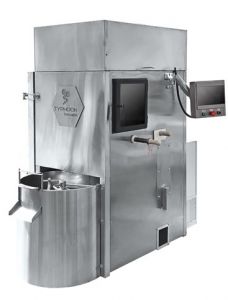 P-5045 TYPHOON FLUID DYNAMIC AIR ROASTER 8 KILOS
P-5045 TYPHOON FLUID DYNAMIC AIR ROASTER 8 KILOS
TYPHOON
FLUID DYNAMIC AIR ROASTER
8 KILOS
THIS FLUID DYNAMIC AIR ROASTER MAY BE THE MOST ADVANCED ROASTING TECHNOLOGY AVAILABLE TO THE SMALL BATCH SPECIALTY ROASTER. VARIABLE BATCH SIZES ALLOW YOU TO ROAST 4 KILOS TO 8 KILOS WITH PERFECT PROFILE CONTROL. SEPARATE COOLING CHAMBER MEANS FASTER CYCLE TIME AND BETTER THROUGHPUT. FOR CLEAN FLAVOR PROFILES WITH EVEN ROAST AND FULL BEAN DEVELOPMENT MEET TYPHOON.AN EXTREMELY LARGE, POWERFUL COFFEE ROASTER.
QUANTITY: 1
Learn More -
 M-4007 NITRIC ACID PLANT -1,000 TONS PER DAY & 500 TONS PER DAY
REFERENCE NUMBER: M-4007
NITRIC ACID PLANT -1,000 TONS PER DAY & 500 TONS PER DAY
UNUSED 1,000 TON/DAY NITRIC ACID PLANT
(SEE 500 TON/DAY NITRIC ACID PLANT BELOW)- PRODUCT: WEAK NITRIC ACID
- MAJOR EQUIPMENT:
(CONTACT IPP FOR A COMPLETE LIST) - ABSORBER COLUMN:
- 304LSS CONSTRUCTION
- (37) SIEVE TRAYS
- AIR COMPRESSOR:
- 201,100 NM³/HR (DRY)
- TYPE AV63-14, AXIAL
- 14.3 MW
- 5,199 RPM
- NOX COMPRESSOR:
- 181,000 NM³/HR
- TYPE E90-3, CENTRIFUGAL
- 8.6 MW
- 5,820 RPM
- EXPANDER:
- 161,000 NM³/HR (DRY)
- TYPE WP15.5-870/380, CENTRIFUGAL
- 5,200 RPM
- STEAM TURBINE:
- 48.96 TON/HR
- TYPE NK40/45/40, CONDENSING
- 9.1 MW
- AMMONIA BURNER
- CONTACT IPP FOR A COMPLETE PROCESS DESCRIPTION AND FLOW DIAGRAM
- COMPLETE DOCUMENTATION AVAILABLE
500 TON/DAY NITRIC ACID PLANT
- PRODUCES 65% CONCENTRATED NITRIC ACID
- TURN-DOWN CAPABILITIES AS LOW AS 300 TON/DAY
- TECHNOLOGY: WEATHERLY MEDIUM-PRESSURE
- THIS PLANT IS A NET STEAM EXPORTER WITH 550, 175, AND 60 PSIG STEAM BEING PRODUCED ON THE WASTE HEAT BOILERS AND 520 PSIG STEAM BEING CONSUMED BY THE AIR COMPRESSOR STEAM TURBINE DRIVE
- MAJOR EQUIPMENT:
(CONTACT IPP FOR A COMPLETE LIST) - ABSORBER COLUMN:
- 11' DIA. X 127'
- 304LSS CONSTRUCTION
- (49) SIEVE TRAYS
- OPERATES AT 98% EFFICIENCY
- AIR COMPRESSOR:
- INGERSOLL RAND 2-STAGE CENTRIFUGAL
- INCLUDES 520 PSIG TERRY STEAM TURBINE DRIVE ASSISTED BY A DRESSER-RAND TAIL GAS TURBINE DRIVE
- CONVERTER:
- 304LSS CONSTRUCTION WITH AN INCONEL 617 BASKET
- CATALYST COMPOSITION IS 90% PLATINUM, 5% RHODIUM AND 5% PALLADIUM
- HEAT TRAIN:
- CONTACT IPP FOR COMPONENT DETAILS
- INCLUDES EXPANDER GAS HEATER, MEDIUM-PRESSURE WASTE HEAT BOILER, TAIL GAS HEATER, FILTER AND LOW-PRESSURE WASTE HEAT BOILER
- CONTACT IPP FOR A COMPLETE PROCESS DESCRIPTION AND FLOW DIAGRAM
COMPLETE DOCUMENTATION AVAILABLE
Learn More -
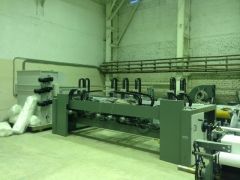 C-4394 SCHOTT & MEISSNER AIRLAID THERMOBONDING LINE, WORKING WIDTH 3400mm, YEAR 2014
C-4394 SCHOTT & MEISSNER AIRLAID THERMOBONDING LINE, WORKING WIDTH 3400mm, YEAR 2014
SCHOTT & MEISSNER AIRLAID THERMOBONDING LINE
YEAR: 2014
WORKING WIDTH: 3400mm
ON THE MILL FLOOR BUT NEVER INSTALLED
CONSISTING OF:
1 BO 150 BALE OPENER
1 FO 125 FINE OPENER
1 TFF 30 TRANSPORT FAN
2 FC 150 FILLING CAGES
2 BO 150 BALE OPENERS
3 WPS 150 WEIGHING PLATE SYSTEMS
2 CMO 150 CONTINUOUS MIXING OPENERS
1 TFF 30 TRANSPORT FAN
1 LVB 150 LARGE VOLUME BLENDER
1 TFF 30 TRANSPORT FAN
1 DMX METAL DETECTOR
1 PO 175 BUFFER EQUIPMENT
1 TFF 30 TRANSPORT FAN
1 AWF 344 AIRLAID SYSTEM
1 TOPCON LP OVEN
DOUBLE BELT
2 X 3 M SECTIONS
2 X 2 M COOLING SECTIONS
1 CUTTING AND WINDING UNIT
UP TO 1 400 KG/HQUANTITY: 1 LINE
Learn More -
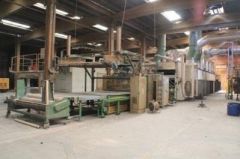 M-5987 LAROCHE, DOA, SCHOTT & MEISSNER AIRLAY THERMOBONDING PRODUCTION LINE WIDTH 2500mm
M-5987 LAROCHE, DOA, SCHOTT & MEISSNER AIRLAY THERMOBONDING PRODUCTION LINE WIDTH 2500mm
AIRLAY / THERMOBONDING PRODUCTION LINE
WORKING WIDTH: 500mm
MAKE: LAROCHE, DOA, SCHOTT & MEISSNERBALE OPENER
MIXING BELT
PRE-OPENER
FINE OPENER
FILTER UNIT
COMPACTION UNIT FOR DUST
DOA AIRLAY AND FEEDER
RESIN DOSING UNIT
SCHOTT & MEISSNER OVEN
WINDING
FLAT BOARD ACCUMULATING DEVICE
HYDRAULIC PRESS FOR BOARDS PACKING
HORIZONTAL HYDRAULIC PRESS FOR WASTESQUANTITY: 1
Learn More