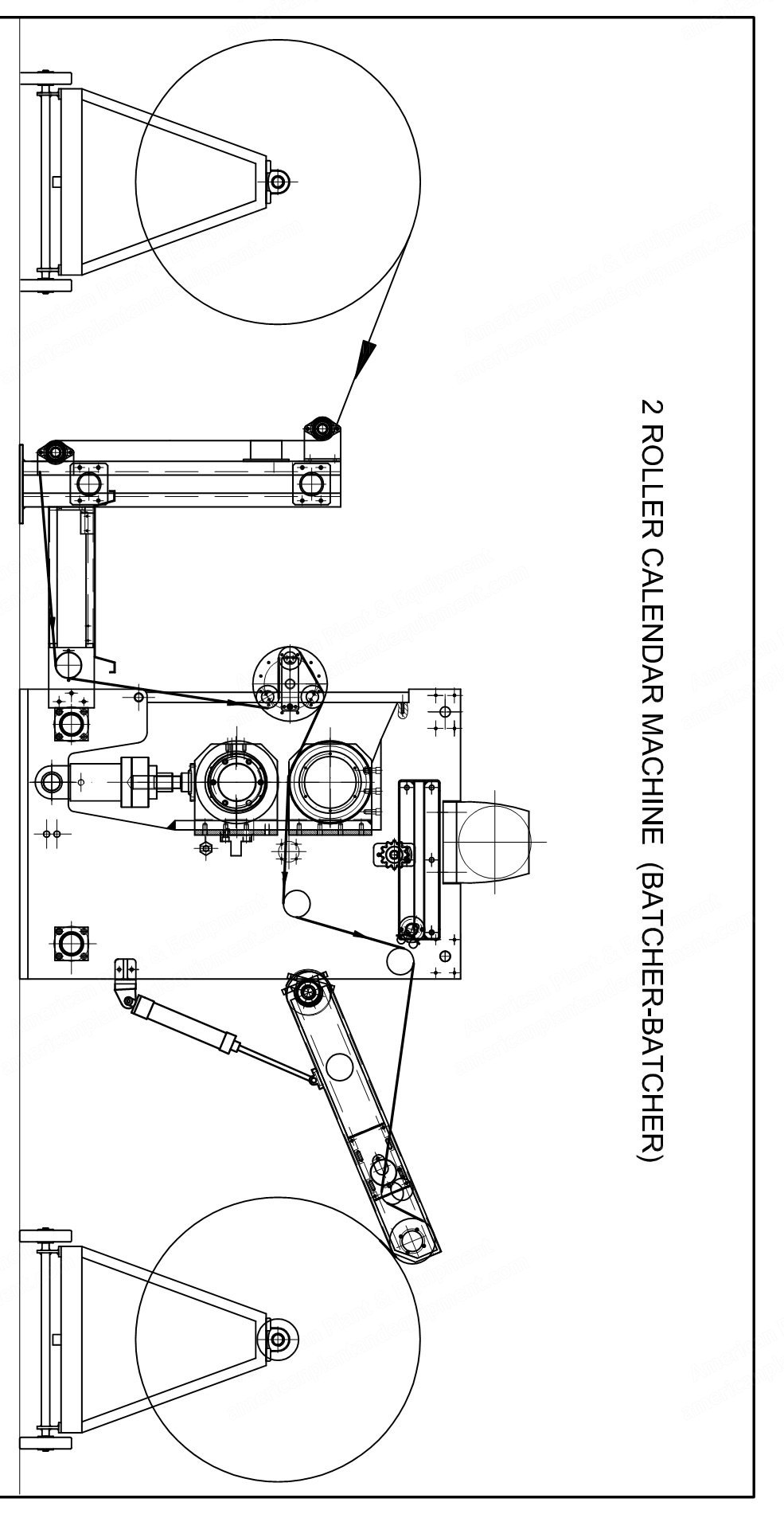
Polteks, Hydraulic Calender, 2 Rolls, 2400mm, Friction Type
Scroll to zoom
100%
Description
Overview
For the treatment of woven fabrics.
Effects: rolling, glazing, luster, matte and softness effect.
Main Frame
Number of main rollers: 2.
Fabric width: 2400 mm.
Main roller width: 2600 mm.
Main roller diameters: steel roll 500 mm, polyamide roll 510 mm.
Roll arrangement: top roll is steel roll (chromium coated), bottom roll is hydraulic polyamide roll.
Max. linear pressure: 300 kg/cm.
Heating system: steel roll includes internal heating system with thermal oil up to 200 °C.
Installed power required: total ca. 71.70 kW (main drive motor ca. 15.00 kW, winder unit motor ca. 2.20 kW, hydraulic unit motor ca. 11.50 kW, cooling unit motor ca. 3.00 kW, heating unit ca. 40.00 kW).
Main rolls have been mounted on ball bearings of extremely good quality and the bearing cases can move upwards and downwards without any resistance by means of grooves located on backsides of bearings, thus maintenance process can be performed easily.
Fabric opening system: eliminates wrinkles found on top of fabrics before rollers and ensures the fabric to enter the main roller as plain; also helps the fabric to enter printing process as stretched.
Automatic cooling system: ensures the rollers in contact with steel roll working at high temperatures are not affected and damaged due to high heat; rollers are cooled by pipes connected to blow out fans having high flow rate; enables cooling various sections of the roller since its blowing-pipe is adjustable.
Seam detector: detects seams of fabrics that may damage rollers and ensures to give temporary space between rollers and to return to former position after seam passes through.
Guidance rollers: two rubber coated directional rollers within the main frame.
Static electric elimination system.
Inlet Unit
Inlet stretching: adjusts the stretching level of fabric within the machine from inlet to exit.
Metal detector: detects ferromagnetic metal particles (pins, staples, etc.) that may be found on fabrics and ensures the machine stops automatically to avoid damaging the rollers.
Fabric edge holder (corrector): ensures the fabric passes through the rollers continuously in straight form; detects fabric movements towards left and right sides by circuit cutters (sensors) and brings fabric to central position; adjustable according to fabric width.
Guidance rollers: five rubber coated directional rollers.
Winder Unit
Winder unit puller: ensures the fabric entering the winder unit is warped on it.
Expander: ensures wrinkles of fabrics are removed before being wrapped on the winder unit so it is wrapped in a straight form.
Dancer system: ensures synchronization between motors of the machine (main motor and winder unit motor).
Pistons: two pneumatic winder unit lifting pistons.
Guidance rollers: rubber coated directional rollers within the winder unit.
Folder Unit
Bundle pulling cylinder: ensures the fabric entering the cylinder is pulled.
Guidance cylinders: rubber coated.
Pressure cylinder: rubber-coated pressure cylinder that helps fabric passage by applying pressure on bundle drawing cylinder.
Swinging arms: folding length adjustment of fabrics is performed by means of holes located on the arm.
Hydraulic Unit
Ensures attaining the requested linear pressure by means of pumps and hydraulic pistons connected to the unit.
Automatically stops when the system reaches the desired pressure value.
Hydraulic is controlled as PLC and existing value can be read from the electrical panel indicators.
Control Panel
All adjustments of the machine can be made and monitored by the PLC screen.
Temperature control: desired temperature value is adjusted and then resistances are started to operate; either an upper temperature limit can be set or a lower temperature limit (start value of cooling unit) can be adjusted.
Working speed of the machine and working direction of rollers can be adjusted; working speed can be monitored.
Following the fabric material passing through the machine.
Pressure value can be monitored and hydraulic unit can be started automatically by setting the values.
Machine stop and start actions can be made.
Electrical Panel
Covers the drive systems of motors, contactors, fuses and other materials.
Request a Quote
✓
Request sent
Thank you, our team will reply to you shortly.
Direct access to our team
Email American Plant & Equipment
Tell us what you want to buy, source, finance, or sell. A machinery specialist will follow up with you.
✓
Thank you. Your request is with the American Plant and Equipment team.
A machinery specialist will follow up with you.
Machinery updates
Subscribe to our email list
Tell us which industries you follow and we will send you the machines that match.
✓
You are on the list.
We will email you when machines that match your interests come in. Unsubscribe from any message.