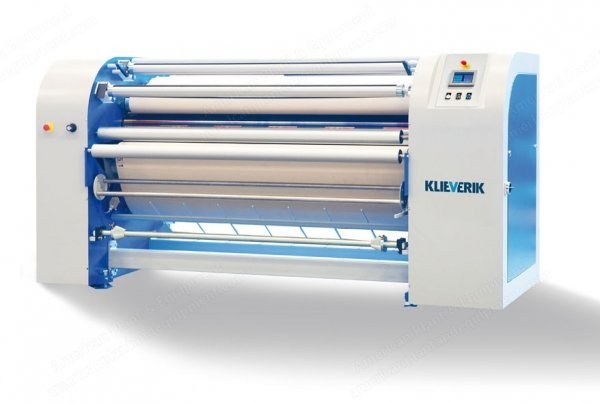
Klieverik, Transfer Printing Calender, 3200mm Working Width, 35 m/min
Scroll to zoom
100%
Description
Overview
Klieverik transfer printing calender with 3200 mm working width
Transfer printing is a well-proven technology resulting in brilliant colours and a very high print definition
The key advantage of this process is the relatively simple operation in which dyes are transferred from printed transfer paper to textile
Two main end products can be produced with transfer printing: disperse dyestuff or polyester or other manmade fibers and reactive dyestuff on cotton or other cellulose fibers
Technical Specifications
Working widths from 1800 to 3200 mm
Drum diameters from 500 to 1800 mm
Mechanical speeds up to 35 m/min
Temperature: 0 to 240°C
Drum heated with electrical elements or by external boiler
Extensive execution with winding and unwinding positions for transfer paper, protective paper and textile
Transfer Printing Calender For Manmade Fibers
This technology makes for a reliable and compact system in combination with disperse dyestuff and synthetic woven, knitted or non-woven fabrics like polyester, nylon, acrylic and blends
At temperatures of 170°C and higher, the dyes sublimate, penetrate and fixate into the synthetic fibers
Transfer printing offers an optimum combination of just in time delivery, economy and simplicity
The process demands precise temperature control to ensure high-quality results
Klieverik has developed a transfer printing calender which allows the required temperature to be maintained within a very small margin
Advantages Of Transfer Printing Process
Optimal web guidance, web tension control and temperature control
Uniform and step less adjustable blanket pressure
Built-in technology, no need for specialized training; it is therefore easy to operate
Wide range of auxiliary equipment
Completely reproducible process
Easy maintenance
Short process time
Only small floor space required
High flexibility and short runs
Low consumption of dyestuff
Low initial investment and energy consumption
Very fine details in design
Easy access to existing design libraries worldwide
First class quality with high degree of fastness
No need for further fabric finishing
Environmental safe process
Request a Quote
✓
Request sent
Thank you, our team will reply to you shortly.
Direct access to our team
Email American Plant & Equipment
Tell us what you want to buy, source, finance, or sell. A machinery specialist will follow up with you.
✓
Thank you. Your request is with the American Plant and Equipment team.
A machinery specialist will follow up with you.
Machinery updates
Subscribe to our email list
Tell us which industries you follow and we will send you the machines that match.
✓
You are on the list.
We will email you when machines that match your interests come in. Unsubscribe from any message.