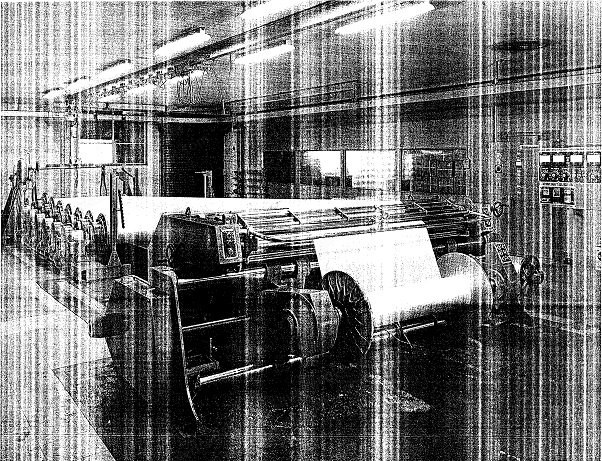
KB20 Rebeamer, 3300mm Working Width, 150 m/min, 22kW
Scroll to zoom
100%
Description
Overview
Designed to match the KSH500, KSH400, or KS200 sizing machine
KB20 beamer with powder brakes exhibits high adaptability irrespective of changes in market demand
Specifications
Maximum yarn speed is 150 m/min
Maximum yarn tension is 400 kg
Maximum beaming width is 3300 mm (130)
Maximum loom beam diameter at 1000 mm (40)
Has a 22 kW DC motor, controlled by a silicon rectifier, allowing for easy speed changes via a dial
The loom beam holders are separated from the head stock frames; the distance between the holders can be adjusted with switches
The zig-zag comb handle, speed setting dial, speed meter, tension setting dial, preset tension counter, etc., are all located on the front of the machine within easy reach, increasing operational efficiency
The loom beam is driven by a variable speed motor, the DC motor
This special motor is designed to provide uniform yarn speed even as the loom beam diameter changes
The winding tension is determined by the take-up rollers connected to two DC motors
The powder brakes are controlled automatically to maintain uniform yarn tension, despite changes in section beam diameters
This tension control is ideal, entirely eliminating any abrupt changes in the tension
The winding tension is controlled by the two DC motors, connected to the take-up rollers, maintaining precise yarn tension
As the loom beam diameter increases, tension can be decreased gradually by 50 kg
The taper tension can be set so that the ideal beam configuration is attained
The PIV take-up automatically monitors tension; adjustment is not needed during operation
Beam Stand
Section beams are arranged so that each yarn is taken up on loom beams with even intervals avoiding snarling, to obtain clear shedding during weaving
Tension control by powder brakes assures constant and stable tension compensating diameter change in section beam
Automatic control of take-up diameter detector, over-run preventer, and emergency stop device for power failure maintain stable and constant tensions during operation and also in acceleration or deceleration
Beam stand tension indicator is available as an option, this device is to monitor tensions during operation from start to end on the meter mounted on the front door of the control box
It maintains suitable tension for various kinds of yarn and facilitates operation in different take-up diameters
Take-Up (DC-D System)
Tensions are controlled by tension feedback control system via DC motor connected to take-up roller
DC-D take-up system provides direct rotation of loom beams and automatic tension adjustment by DC motor so that constant tension can be obtained during both running and transient operation
This also allows selection of taper tensions in accordance with yarn characteristics
Tension control range is set wide between 30 kg and 400 kg with superior stability in low tension take-up
All operations are controlled with push buttons and dials that are concentrated on the right-side frame for smooth operation
Moreover, the slow-start and soft-stop system eliminates impacts on yarn and possibility of loose yarn due to beam over-run
Cut marking system for spraying dyes on yarn sheet according to the preset lengths is controlled simply by setting numbers on the counter
Up to 1016 mm diameter flange can be mounted
Take-up width is simply adjusted by independent motor which ensures easy operation without the annoyance of positioning
High speed operation is possible regardless of take-up tensions and take-up diameter ratios
Double Deck Beam Stand (Optional)
Double deck system for the beam creel has 6 beams on both upper and lower decks, making a total of 12 beams
Water cooled powder brakes are used to assure smooth and uniform tension for the section beams
The braking power can be easily adjusted; there is no need to adjust weights, etc., as with a conventional mechanical brake system
Request a Quote
✓
Request sent
Thank you, our team will reply to you shortly.
Direct access to our team
Email American Plant & Equipment
Tell us what you want to buy, source, finance, or sell. A machinery specialist will follow up with you.
✓
Thank you. Your request is with the American Plant and Equipment team.
A machinery specialist will follow up with you.
Machinery updates
Subscribe to our email list
Tell us which industries you follow and we will send you the machines that match.
✓
You are on the list.
We will email you when machines that match your interests come in. Unsubscribe from any message.