Heating type: direct steam heating and indirect heat, or electric heating (user can choose)
Control mode: manual, semi-automatic or full-automatic computerized
Motor: drive motor 1.1 kW; pump motor 4 kW
Dimension: LWH 2425 mm x 2550 mm x 2250 mm
Structure
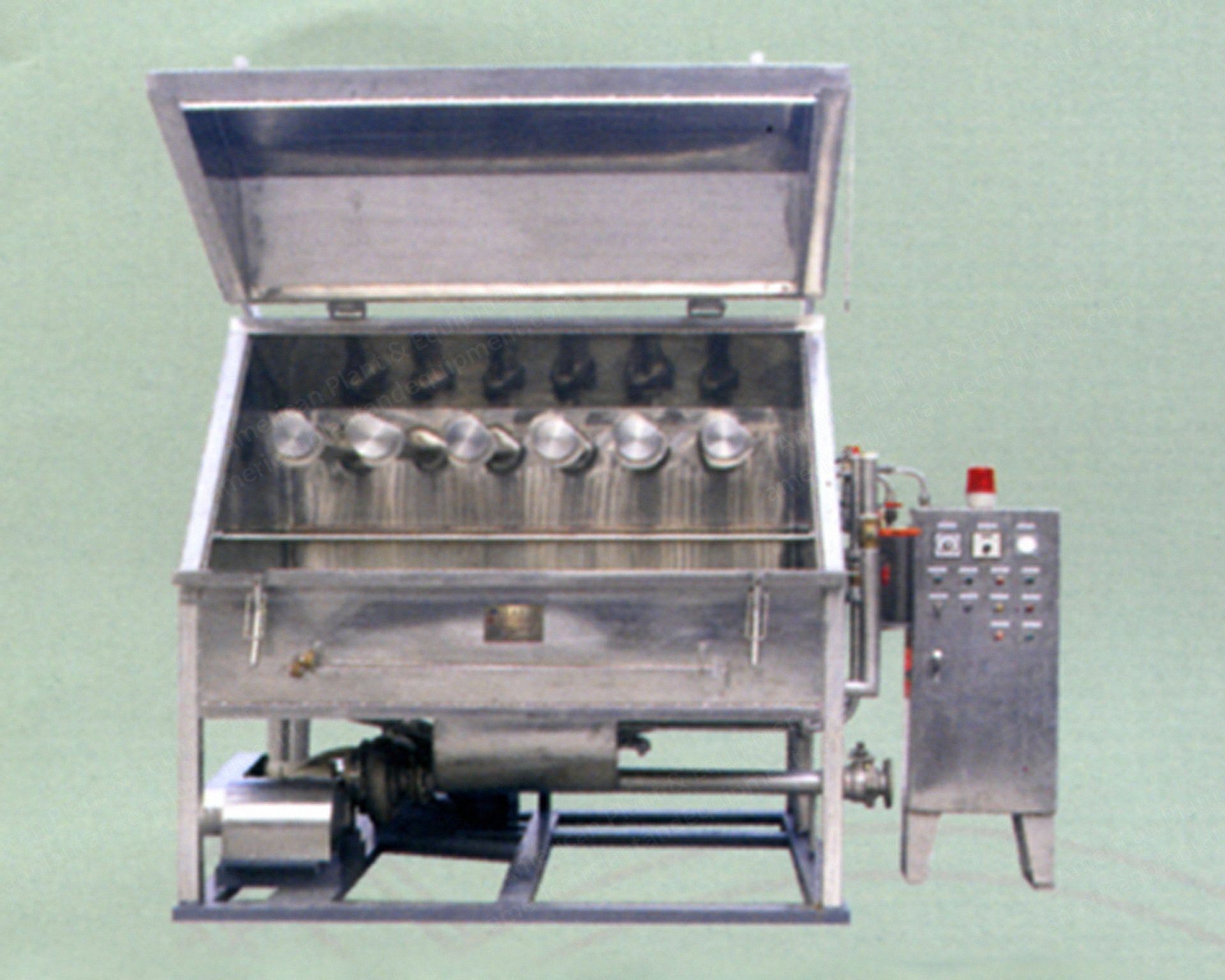
Body of the tank: rectangular, welded by stainless steel (1Cr18Ni9Ti), polished and pickled to prevent liquid contamination and provide easy cleaning
Back and top of the tank have high temperature resistant glass window with a lamp; operator can observe working condition at any time
At the bottom in the tank is a strainer; liquid is filtered prior to the circulating pump to prevent yarn from entering the pump body and avoid damaged parts
Strainer equipped with 2 heating type with small holes; steam directly through a small hole for heating liquid
Under the tank, there is a liquid discharge valve to remove waste liquid from the tank
There is a feeding cylinder at the left; manual valve controls the dye solutions
Liquid Circulation System
Liquid in the tank goes into circulation through strainer tube, then into the spray pipes through the circulation valve; yarn is sprayed and returned to the tank by the return valve
Mixing the solution into the tank; circulating pump should be started when temperature begins to rise
Circulating pump and valve are all made of stainless steel
After liquid goes into the spray pipes, it is sprayed through the holes of the pipe, forced to work by the yarn bundle hanging on the nozzle
After liquid flows through the yarn bundle, the liquid flow is recirculated and used in the tank
Drive System of Spray Pipe
Nozzle is driven by a motor driven by a V-belt pulley; a worm wheel rotates 6 turning rods
At the end, a cam is connected with the worm rod; the cam linkage by the connecting rod and the circulating valve
Turning rod turns around in a circle; circulating valve controls the fluid half cycle; the other cycle flows returns to the tank by the return pipe, then the nozzle stops spraying
Request a Quote
✓
Request sent
Thank you, our team will reply to you shortly.
Direct access to our team
Email American Plant & Equipment
Tell us what you want to buy, source, finance, or sell. A machinery specialist will follow up with you.
✓
Thank you. Your request is with the American Plant and Equipment team.
A machinery specialist will follow up with you.
Machinery updates
Subscribe to our email list
Tell us which industries you follow and we will send you the machines that match.
✓
You are on the list.
We will email you when machines that match your interests come in. Unsubscribe from any message.