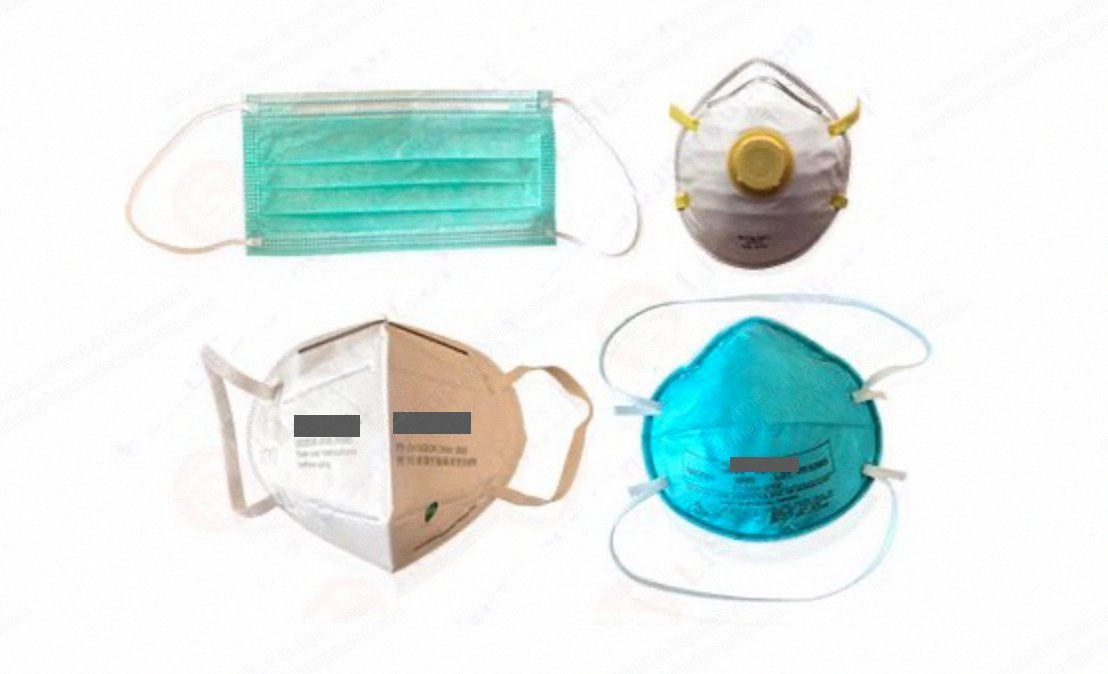
Oil-salt two-in-one face masks particulate filtration efficiency (PFE) tester.
Used to test the particulate filtering efficiency of daily protective masks and medical masks.
Determines the obstruction performance of ordinary fabrics and medical protective masks against a constant flow of airflow.
Widely used for medical device inspection centers, safety protection inspection centers, labor protection inspection centers, drug inspection centers, disease prevention and control centers, textile testing centers, hospitals, mask manufacturers, etc.
Standards
Designed and manufactured according to YY0469-2004 “Technical requirements for medical surgical masks” and GB2626-2006 “Respiratory protective equipment self-suction filter anti-particle respirator”.
Also refers to the advanced design concepts of similar international equipment (such as the American TSI company), based on the principle of “European standard EN1822-3: 1998 single-sheet filter material test”, but suitable for test status of domestic related industries.
GB/T 32610-2016 “Technical specifications for daily protective masks”.
GB/T 19082-2009 “Technical requirements for medical disposable protective clothing”.
GB/T 19083-2010 “Technical requirements for medical protective masks”.
GB 24539-2009 “General technical requirements for protective clothing and chemical protective clothing”.
YY/T 0969-2013 “Standard for disposable medical masks”.
ASTM F1862-17, ASTM F2299-03 (2017), ASTM F2100-2019, BS EN14683-2019, BS EN 14387-2004+A1, BS EN 136-1998, BS EN 140-1999, BS EN 143-2000+C1-A1, BS EN 149-2001+A1, etc.
Standard requirement
Using sodium chloride particles to detect KN filter elements, and use dioctyl phthalate or equivalent oil particles (or paraffin oil) to detect KP filter elements.
Test according to 6.3.
During the test, the filtration efficiency of each sample should always meet the requirements of table 2.
The system contains two independent aerosol generators: oily and salty aerosol generators containing two particle counting sensors, one particle concentration sensor and one particle generator.
Power: AC200V 50Hz (120V/60Hz can be customized).
Characteristics
The oil and salt two-in-one test and the two sets of test hardware systems are completely independent. The test does not interfere with each other to ensure the accuracy of the oil and salt test.
The aerosol generator is used to produce continuous and stable aerosol particles, which is convenient for filling the solution.
A high-precision particle concentration counter (the core component of the sensor imported from the US) is used to measure the number of aerosol particles.
The whole particle anti-leakage design protects the safety of laboratory personnel.
Equipped with aerosol particulate static neutralization device.
Configure temperature and humidity sensor, real-time display of ambient temperature and humidity (temperature and humidity requirements: 25°C +/- 5°C, 30% RF +/- 10% RH).
Equipped with glass rotor flowmeter, vacuum pump and gas electromagnetic flowmeter.
Control system: touch-screen computer and test software have been configured to automatically test gas concentration and filtration efficiency, save, output, query, copy and export test data, support A4 paper printing and small bill printing test results.
Request a Quote
✓
Request sent
Thank you, our team will reply to you shortly.
Direct access to our team
Email American Plant & Equipment
Tell us what you want to buy, source, finance, or sell. A machinery specialist will follow up with you.
✓
Thank you. Your request is with the American Plant and Equipment team.
A machinery specialist will follow up with you.
Machinery updates
Subscribe to our email list
Tell us which industries you follow and we will send you the machines that match.
✓
You are on the list.
We will email you when machines that match your interests come in. Unsubscribe from any message.