Winding is the process of transferring yarn or thread from one type of package to another to facilitate subsequent processing.
Not only must the package and the yarn itself be suitable for processing on the next machine in the production process, but also other factors such as final packing cases and pressure due to winding tension must be considered.
The skein is in the form in which the yarn is put up for sale or for a future process.
The skein is made by a process of reeling and indicates a continuous coil of yarn that has been wound around a revolving frame of a known circumference.
It is tied around at one or more points in its circumference, so that when removed from the frame it forms a loose coil that may be handled without damage.
Specifications
Power consumption: 1.0 kW.
Single phase 230 V, 50/60 Hz (customizable).
Machine dimensions (length x width x height): 3060 mm x 1580 mm x 2060 mm (120 in x 62 in x 81).
Machine weight: 500 kg.
Wooden crate size: 235 x 140 x 182 cm, with a gross weight of 840 kg.
Technical Features
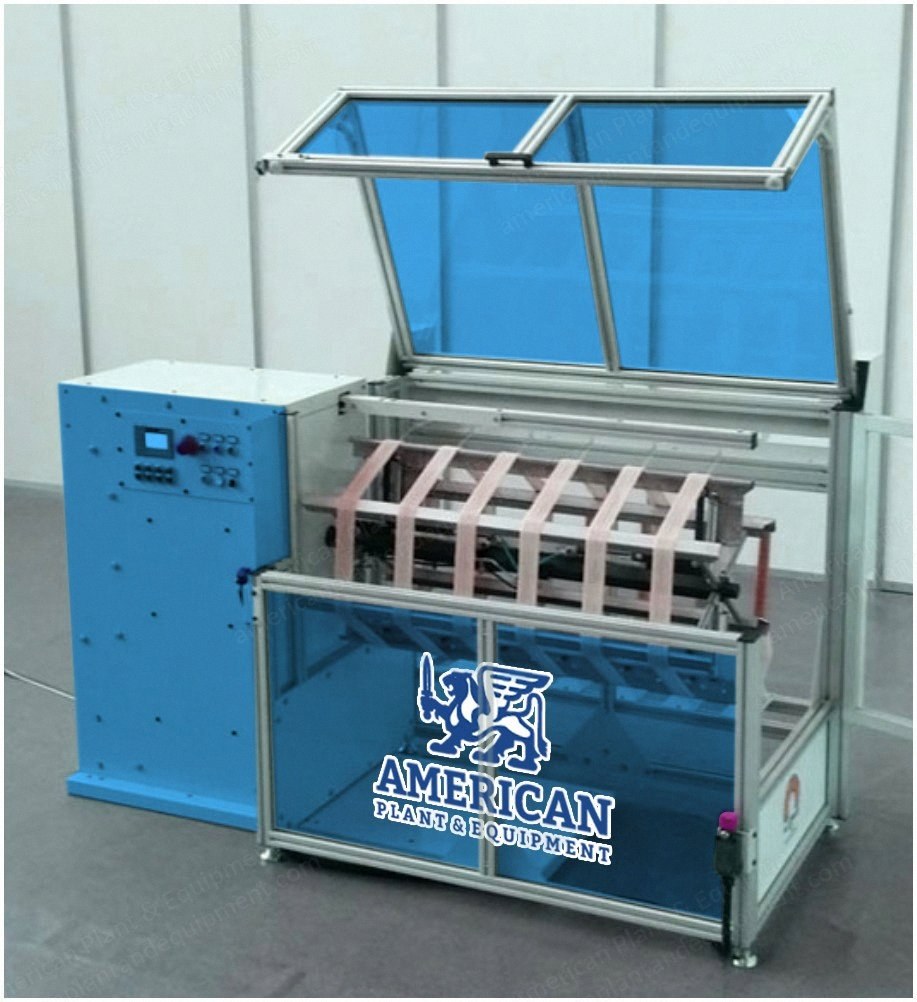
The skein winder comes with automatic opening and closing and electronic length control of the yarn wound.
Tubes or bobbins are positioned in the rear part of the machine; the yarn passes through the tensioner and the movable thread guide and then connects to the rotating structure.
After setting the desired length and pressing the start button, the skein winder automatically winds the desired amount of yarn.
During the final stages, the skein winder slows down and, once the length is reached, the rotating structure contracts automatically to allow quick extraction of the hanks.
Rotating Hexagon With Pneumatic Mechanism
The main part of the skein winder is the central rotating hexagon structure.
It is 1.8 m (70) circumference and is formed by a steel shaft on which spacer bars are mounted.
To avoid friction or color transfer, the six bars on which the yarn is wound are made of stainless steel.
The opening and closing of the hexagon is actuated by a pneumatic cylinder and does not require any manual intervention.
There are also spring devices which allow quick connection of the yarn to the frame.
Transparent Safety Cover
The rotating structure is protected by a transparent cover with a double opening.
This protection follows current safety standards and both doors are protected by a safety switch.
To facilitate lifting, the top cover is connected to two air springs which reduce the force required for movement.
The protective structure is made of aluminum with large transparent windows to allow observation of the process.
Creel
On the rear side of the skein winder there is a structure on which you place the tubes or cones.
This creel is movable in height and is equipped with adjustable spring connectors that allow insertion of cones or tubes of any size.
At the top of the structure there is a ceramic ring and a spring tensioner that adjusts the tension of the yarn wound.
Electronic Control
The length of yarn wound is controlled through an electronic sensor that automatically slows down the speed of the winder during the last meters of yarn.
On the front side of the machine is placed a display with the main functions; operation is very intuitive and with four buttons you can vary the length of the yarn wound.
The skein winder can measure the yarn both in meters or in yards.
On the front panel there are also the basic control buttons, and on the rear electric panel you can find the potentiometers to control the rotating speed.
Request a Quote
✓
Request sent
Thank you, our team will reply to you shortly.
Direct access to our team
Email American Plant & Equipment
Tell us what you want to buy, source, finance, or sell. A machinery specialist will follow up with you.
✓
Thank you. Your request is with the American Plant and Equipment team.
A machinery specialist will follow up with you.
Machinery updates
Subscribe to our email list
Tell us which industries you follow and we will send you the machines that match.
✓
You are on the list.
We will email you when machines that match your interests come in. Unsubscribe from any message.