
Search results for: 'wool s'
- Related search terms
- Wool p
- Wool pro
- wool sc
- Wool f
- wool waste com
-
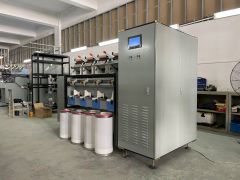 T-8978 LABORATORY ROTOR SPINNING MACHINE, CAPACITY 0.25 TO 1 KG PER HOUR OR CUSTOMIZEDT-8978 LABORATORY ROTOR SPINNING MACHINE, CAPACITY 0.25 TO 1 KG PER HOUR OR CUSTOMIZED TECHNICAL SPECIFICATION: SPINDLE NUMBER: 1, 2, 3, 4 OR CUSTOMIZED FIBER TYPE: COTTON REVOLVING CUP SPEED: 30000RPM COMBING ROLLER: 6000RPM DRAFTING RANGE: 30 TO 250 COILING SPEED: 20 TO 110M/MIN FIBER LENGTH: 22 TO 42mm OUTPUT CAPACITY: 0.25 TO 1 KG PER HOUR OR CUSTOMIZED POWER: 220V/380V, 50/60Hz, 640W DIMENSION: 800 X 600 X 1700mm Learn More
 -
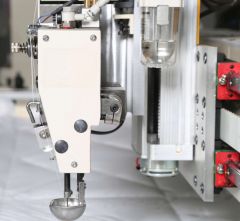 YY-1521COMPUTERIZED SINGLE HEAD QUILTING MACHINEYY-1521COMPUTERIZED SINGLE HEAD QUILTING MACHINE QUANTITY: 1 Learn More
 -
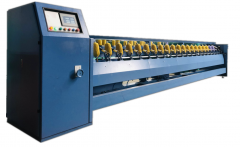 YY-1311 BALL WINDER MACHINE, PACKAGE WEIGHT 50 TO 100 GRAMS, 256mm SPINDLE GAUGEYY-1311 BALL WINDER MACHINE, PACKAGE WEIGHT 50 TO 100 GRAMS, 256mm SPINDLE GAUGE VOLTAGE: 380V, 3 PHASE, 60 OR 50Hz (AS PER CUSTOMER) YARN MATERIAL: WOOL YARN WITH AUTOMATIC YARN CUTTING SYSTEM QUANTITY: 1 Learn More
 -
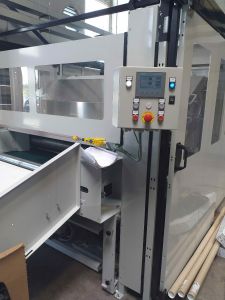 T-7125 CARDING WILLOW, WORKING WIDTH 1500mmT-7125 CARDING WILLOW, WORKING WIDTH 1500mm TYPE OF FIBRES: ALPACA OR WOOL WILLOW CARDING IS EQUIPPED WITH MECHANICAL AND ELECTRICAL DRIVES CAPACITY: UP TO 1500 KGS/HOUR WORKING WIDTH: 1500mm QUANTITY: 1 Learn More
 -
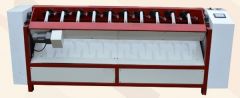 AJ-1112 YARN BALL WINDER MACHINE, 10 POSITIONS, NEWAJ-1112 YARN BALL WINDER MACHINE, 10 POSITIONS, NEW MOTOR POWER: 1.5 KW LARGE SIZE FORMED: 150mm x 150mm DIMENSIONS: 2800mm x 800mm x 850mm WEIGHT: 250 KGS TYPE: 10 POSITIONS QUANTITY: 1 Learn More
 -
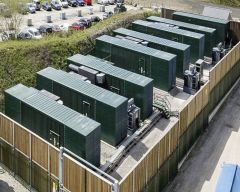 MTU CONTAINERIZED DIESEL GENERATOR PLANT, 30.5 MW, YEAR 2017 AND 2018REFERENCE NUMBER: T-6933 MTU CONTAINERIZED DIESEL GENERATOR PLANT, 30.5 MW, YEAR 2017 AND 2018 MTU CONTAINERIZED DIESEL GENERATOR PLANT 30.5 MW FIFTEEN (15) MTU16V4000G63 EXHAUST EMISSION OPTIMIZED DIESEL ENGINES COUPLED TO HIGH PERFORMANCE MECC ALTE ECO46 2L/4A ALTERNATORS, RATED AT 2546 KVA/2033 KW STANDBY POWER AND 2303 KVA / 1842 KW PRIME POWER, 1500 RPM, 400 VOLT, 50 Hz, YEAR OF MANUFACTURE: 2017 AND 2018, ONLY 150 TO 200 HOURS SINCE NEW. EACH GENERATOR IS HOUSED IN A 40 FT SOUND ATTENUATED CONTAINER. SKID MOUNTED RADIATOR DESIGNED FOR HIGH END TEMPERATURES, 40 FT HI CUBE CONTAINER WITH SWITCH GEAR ROOM AND CONTROL ROOM, EQUIPMENT INCLUDES: CONTROL PANELS, CONTROL SYSTEM, BREAKER PANELS, HEATERS, BATTERY CHARGER, SWITCH GEAR, TRANSFORMERS, FUEL TANK SYSTEM AND ETC. COMPLETE POWER PLANT IN MODULE DESIGN THAT CAN BE EASILY TRANSPORTED AND SET UP WITHIN DAYS TO GENERATOR STEADY STREAM OF ELECTRICAL POWER. (15) ALL PURPOSE 40 FT SOUND ATTENUATED CONTAINERS WITH MTU16V4000G63 GENERATORS SETS. RATING: 2546 KVA/2033 KW STANDBY POWER AND 2303 KVA / 1842 KW PRIME POWER RADIATOR: SKID MOUNTED RADIATOR DESIGNED FOR HIGH END TEMPERATURES RADIATOR DESIGN: TECNO GROUP TG00094AA 30M/S REDUCED AIRFLOW RADIATOR WITH ELECTRIC POWERED COOLING FAN POWER BOX: CP6 MODEL: HMW‐2200‐T5 STD 2200KVA V400 / 50 Hz AS20 YEAR: 2017 AND 2018 HOURS: 150 TO 200 HOURS ONLY VOLTAGE: 400V, 3PH, 50 Hz ENGINE: MTU 16V4000G63 EXHAUST EMISSION OPTIMIZED ENGINE ENGINE SPEED: 1500 RPM STARTING SYSTEM: 24V ELECTRIC WITH OPTIMA YELLOW TOP BATTERIES AND BATTERY ISOLATOR ENGINE GOVERNOR: ADEC ALTERNATOR: MECC ALTE ECO46 2L/4A WITH MAUX EXCITATION, OIL PRIMER AND CENTRIFUGE FITTED AS CONFIRMED BY MTU, SET MOUNTED 4000A 4P MOTORIZED BREAKERS. CONTROL PANEL: AS5 WITH FREE ISSUE COMAP IG‐NTC‐BB + INTELIVISION 5 COMPONENTS AIR CIRCUIT BREAKER PANEL: 4 POLE: 4000A SCHNEIDER NW04 MOTORIZED H2 100KA BREAKING CAPACITY WITH MICROLOGIC 6.0A TRIP UNIT HEATER: THERMOSTATICALLY CONTROLLED 9KW 400V 3 PHASE WATER JACKET HEATER WITH CIRCULATION PUMP BATTERY CHARGER: DEEPSEA DSE9470 10A INTELLIGENT MAINS BATTERY CHARGER INCLUDING: AUTOMATIC ELECTRIC PRE‐LUBE PUMP; SET MOUNTED 2000A NEUTRAL EARTHLING CONTACTOR WITH CT; FUEL RETURN COOLER; CENTRIFUGAL OIL FILTER (MTU) & PRIMARY WATER SEPARATOR FILTER. INCLUDING: AUTOMATIC ELECTRIC PRE‐LUBE PUMP; SET MOUNTED 2000A NEUTRAL EARTHING CONTACTOR WITH CT; FUEL RETURN COOLER; CENTRIFUGAL OIL FILTER (MTU) & PRIMARY WATER SEPARATOR FILTER. TRANSFORMERS QUANTITY 4: 4MVA GBE OIL IMMERSED, FREE BREATHING STEP UP POWER TRANSFORMERS WITH OIL CONSERVATOR AND COPPER WINDINGS; 3 PHASE, 400‐33 KV; 50 Hz QUANTITY 1: 2MVA GBE OIL IMMERSED, FREE BREATHING STEP UP POWER TRANSFORMERS WITH OIL CONSERVATOR AND COPPER WINDINGS; 3 PHASE, 400‐33 KV; 50 Hz HV SWITCHGEAR CONTAINER PURPOSE BUILT 40 FT HI CUBE CONTAINER WITH HEATING LIGHTING AND POWER INSTALLED. LINED WITH ROCK WOOL INSULATED PANELS INCLUDES HIGH LEVEL LOUVER WITH FAN AND LOW‐LEVEL LOUVER FOR NATURAL AIR FLOW. SPLIT INTO TWO SECTIONS/ROOMS WITH A CONTROL ROOM ON ONE SIDE AND SWITCH GEAR IN THE OTHER ROOM WITH 33 KV ABB RING SAFE SWITCHGEAR CONTROL SYSTEM REMOTE COMMUNICATION AND LOAD SUMMATION CONTROL PANEL (RCLSP) 1 X COMAP IM‐NTC BB BASE BOX CONTROLLER (SITE LOAD VALUE MONITORING & INTEGRATION) 1 X COMAP IBNT INTERNET BRIDGE (BROADBAND INTERFACE) 1 X COMAP ILB+ LOCAL BRIDGE (LOCAL & PC REMOTE INTERFACE) 1 X 230/240V DC PSU 1 SET OF CONTROL MINIATURE CIRCUIT BREAKERS 1 SET OF CAN BUS INTERFACE TERMINALS BELDON 3106A CANBUS COMMUNICATION CABLING & CAT 5E ETHERNET COMMUNICATION CABLES COMAP MAINSPRO G59‐3 PROTECTION RELAY (OVER/UNDER VOLTS, Hz & VECTOR SHIFT) FUEL TANK SYSTEM QUANTITY 4 X 40,000L FUEL TANKS; DOUBLE SKINNED; DD50 FUEL POLISHING SYSTEM; BUND ALARM; OVERFILL ALARM AND CONTENTS GAUGE WITH ADJUSTABLE VOLT FREE LEVEL ALARM. QUANTITY 1 X 20,000L FUEL TANKS; DOUBLE SKINNED; DD50 FUEL POLISHING SYSTEM; BUND ALARM; OVERFILL ALARM AND CONTENTS GAUGE WITH ADJUSTABLE VOLT FREE LEVEL ALARM. Learn More
 -
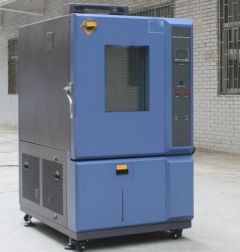 1000 L STABILITY CHAMBERREFERENCE NUMBER: A-2492 1000 L STABILITY CHAMBER SPECIFICATIONS: INNER CHAMBER SIZE: 1 X 1 X 1 mm EXTERNAL DIMENSION: 1.2 X 1.97 X 2.17 mm TEMPERATURE RANGE: 70 TO 180°C HUMIDITY RANGE: 10% TO 98% RH, WHEN THE TEMPERATURE IS ABOVE 60°C, THE HUMIDITY CAN ACHIEVE 10% RH TEMPERATURE & HUMIDITY FLUCTUATION: ±0.2℃, ±0.5% RH INDICATION RESOLUTION: 0.01℃, 0.1% RH TEMPERATURE & HUMIDITY UNIFORMITY: ±2℃, ±3% RH (TESTED WITH THE EMPTY CHAMBER, 30 MINUTES AFTER STABILIZATION) HEAT UP AND COOL DOWN TIME: HEATING RATE: AVERAGE 3 ℃/MINUTES; COOLING RATE: AVERAGE 1 ℃/MINUTE (UNLOADED TEST) MATERIAL: INNER CHAMBER: SUS#304 STAINLESS STEEL EXTERIOR STRUCTURE: STAINLESS STEEL PLATE + POWDER COATED INSULATION: GLASS WOOL & PUF PERSPIRATION RESISTANT: K STYLE TUBE ACCESSORIES • TEMPERATURE RESISTANT SILICONE GASKET: 1 PC • CABLE PORT:1 PC; OD: 100 mm • WINDOW LIGHT: 1 PC • MULTIPANE VIEW WINDOW: 1 PC • LOADING SHELVES: 2 PCS REFRIGERATION & HEATING SYSTEM • ORIGINAL IMPORTED HIGH EFFICIENCY COMPRESSOR • AIR COOLING CONDENSER • FIN – TUBE HEATER • ORIGINAL IMPORTED SOLENOID VALVES • INNER SPIRAL K – TYPE REFRIGERANT COPPER TUBE • U – TYPE FINNED ELECTRO - THERMAL TUBE • HEATING & COOLING SYSTEMS SEPARATED • SINGLE STAGE REFRIGERATING SYSTEM HUMIDIFYING & DEHUMIDIFYING SYSTEM • ELECTRIC & BYTE TYPE HUMIDIFYING SYSTEM • STAINLESS STEEL HUMIDIFYING BARREL WITH VIEW WINDOW FOR WATER LEVEL • ADP DEHUMIDIFYING WAY • OVER – TEMPERATURE AND OVERFLOW PROTECTION UNITS • HUMIDIFYING & DEHUMIDIFYING SYSTEMS SEPARATED CIRCLING & DRAIN SYSTEM • CENTRIFUGAL FAN & IMPORTED MOTOR • REVERSE UNIFLOW (AIR FLOW DIRECTION) • FLOW – THROWS WIND • DRAIN SYSTEM USES SWIRL TYPE OUTLET AND U – TRAP DEPOSITION UNIT PROGRAMABLE MICRO COMPUTER LCD TOUCH CONTROLLER • PROGRAMMABLE TOUCH CONTROLLER, USER - FRIENDLY, STABLE AND EASY USE • PROGRAMS: 99 SEGMENTS PER PROGRAM, 120 PROGRAMS, 120 CYCLING PER PROGRAM • PID & SSR CONTROL WAY, STABLE AND EASY USE • HAVE SLOP CONTROL FUNCTION FOR HEATING & COOLING, LINKED PTNS CAN BE EXECUTED • PID AUTOMATIC CALCULATION • MICRO COMPUTER MULTI FUNCTION CONTROLLER, MAIN COMPONENTS ’DATA AUTOMATICALLY OUTPUT INCLUDING COMPRESSORS, SOLENOIDS, HEATING UNITS, ETC • ERRORS OF MAIN COMPONENTS APPEAR ON THE LCD PANEL • THE BRIGHTNESS OF THE LCD PANEL CAN BE ADJUSTED • TIME SEQUENCE CONTROL INTERFACE RELAYS HAVE 3 GROUPS WHICH MANAGE THE OUTPUT OF OUTSIDE LOGIC UNITS INCLUDING SIGNAL, MECHANICAL AND POWER, ETC • PROGRAMS AUTO – SAVE FUNCTION IF POWER CUT OFF SUDDENLY • HAVE HOLD & ADV BUTTONS INPROGRAMS • AUTOMATICALLY SET THE HIGH & LOW TEMPERATURE LIMITS AFTER PROGRAMS SET • PASSWORD SET FUNCTION • SD CARD SLOT, 2 GB SD CARD, RS232 OR ETHERNET (RJ45) OPERATING ENVIRONMENT • AMBIENT TEMPERATURE: +25℃ (2) RH ≤85% PROTECTION • ELECTRICITY LEAK PROTECTION • LIGHTNING STRIKE PROTECTION, ZRN LIGHTNING ARRESTER INSIDE THE CONTROLLER • SENSOR DATES TRANSFERRED INSIDE THE MICRO COMPUTER • TEMP. SENSORS TO OPEN CIRCUIT OR SHORT CIRCUIT (+ - OVER) • THE FIRST LEVEL OVER TEMPERATURE PROTECTION • ERROR DETECTED UNITS • THE SECOND LEVEL OVER TEMPERATURE PROTECTION TO ELECTRONIC OVER - TEMP PROTECTION UNIT • THE THIRD LEVEL OVER - TEMPERATURE PROTECTION • COMPRESSOR PROTECTION TO REFRIGERANTS PRESSURE PROTECTION & OVERLOAD PROTECTION. • EXTENDED PROTECTION UNIT TO TWO SUPPLETIVE PORTS • ERROR PROTECTION TO POWER CUT OFF, ERROR REPORTS SHOWN IN LCD PANEL AND AUDIBLE ALARM STARTS • DYNAMIC HIGH AND LOW TEMPERATURE PROTECTION • AMBIENT TEMPERATURE PROTECTION TO THE INNER CHAMBER AND SPECIMENS AUTOMATICALLY RETURN BACK TO AMBIENT TEMPERATURE AFTER THE OPERATION STOP SAFETY PROTECTION • NON-FUSE PROTECTION SWITCH • OVERHEAT ALARM PROTECTION • COMPRESSOR OVERLOAD PROTECTION • PHASE SEQUENCE PROTECTION • MOTOR OVER TO CURRENT PROTECTION Learn More
 -
 D-2388 What’s the Best Material for a Mask?
Federal health officials have now recommended that we cover our faces with fabric during the coronavirus pandemic. But what material offers the most protection?
The Centers for Disease Control and Prevention has posted a no-sew mask pattern using a bandanna and a coffee filter as well as a video on making masks using rubber bands and folded fabrics found at home.
While a simple face covering can reduce the spread of coronavirus by blocking outgoing germs from coughs or sneezes of an infected person, experts say there is more variation in how much homemade masks might protect the wearer from incoming germs, depending on the fit and quality of the material used.
Scientists around the country have taken it upon themselves to identify everyday materials that do a better job of filtering microscopic particles. In recent tests, HEPA furnace filters scored well, as did vacuum cleaner bags, layers of 600-count pillowcases and fabric similar to flannel pajamas. Stacked coffee filters had medium scores. Scarves and bandanna material had the lowest scores, but still captured a small percentage of particles.
If you don’t have any of the materials that were tested, a simple light test can help you decide whether a fabric is a good candidate for a mask.
“Hold it up to a bright light,” said Dr. Scott Segal, chairman of anesthesiology at Wake Forest Baptist Health who recently studied homemade masks. “If light passes really easily through the fibers and you can almost see the fibers, it’s not a good fabric. If it’s a denser weave of thicker material and light doesn’t pass through it as much, that’s the material you want to use.”
Researchers say it’s important to remember that lab studies are conducted under perfect conditions with no leaks or gaps in the mask, but the test methods give us a way to compare materials. And while the degree of filtration for some homemade masks seems low, most of us — who are staying home and practicing social distancing in public — don’t need the high level of protection required for medical workers. More important, any face covering is better than none, especially if worn by a person who has the virus but doesn’t know it.
The biggest challenge of choosing a homemade mask material is to find a fabric that is dense enough to capture viral particles, but breathable enough that we can actually wear it. Some items being touted online promise high filtration scores, but the material would be unwearable.
Dressing Up for Work … at Home
Yang Wang, an assistant professor of environmental engineering at Missouri University of Science and Technology, worked with his graduate students to study various combinations of layered materials — including both air filters and fabric. “You need something that is efficient for removing particles, but you also need to breathe,” said Dr. Wang, who last fall won an international award for aerosol research.To test everyday materials, scientists are using methods similar to those used to test medical masks, which everybody agrees should be saved for medical workers who are exposed to high doses of virus from seeing infected patients. The best medical mask — called the N95 respirator — filters out at least 95 percent of particles as small as 0.3 microns. By comparison, a typical surgical mask — made using a rectangular piece of pleated fabric with elastic ear loops — has a filtration efficiency ranging from 60 to 80 percent.
Dr. Wang’s group tested two types of air filters. An allergy-reduction HVAC filter worked the best, capturing 89 percent of particles with one layer and 94 percent with two layers. A furnace filter captured 75 percent with two layers, but required six layers to achieve 95 percent. To find a filter similar to those tested, look for a minimum efficiency reporting value (MERV) rating of 12 or higher or a microparticle performance rating of 1900 or higher.
The problem with air filters is that they potentially could shed small fibers that would be risky to inhale. So if you want to use a filter, you need to sandwich the filter between two layers of cotton fabric. Dr. Wang said one of his grad students made his own mask by following the instructions in the C.D.C. video, but adding several layers of filter material inside a bandanna.
Dr. Wang’s group also found that when certain common fabrics were used, two layers offered far less protection than four layers. A 600 thread count pillow case captured just 22 percent of particles when doubled, but four layers captured nearly 60 percent. A thick woolen yarn scarf filtered 21 percent of particles in two layers, and 48.8 percent in four layers. A 100 percent cotton bandanna did the worst, capturing only 18.2 percent when doubled, and just 19.5 percent in four layers.
The group also tested Brew Rite and Natural Brew basket-style coffee filters, which, when stacked in three layers, showed 40 to 50 percent filtration efficiency — but they were less breathable than other options.
If you are lucky enough to know a quilter, ask them to make you a mask. Tests performed at the Wake Forest Institute for Regenerative Medicine in Winston-Salem, N.C., showed good results for homemade masks using quilting fabric. Dr. Segal, of Wake Forest Baptist Health, who led the study, noted that quilters tend to use high-quality, high-thread count cotton. The best homemade masks in his study were as good as surgical masks or slightly better, testing in the range of 70 to 79 percent filtration. Homemade masks that used flimsier fabric tested as low as 1 percent filtration, Dr. Segal said.
The best-performing designs were a mask constructed of two layers of high-quality, heavyweight “quilter’s cotton,” a two-layer mask made with thick batik fabric, and a double-layer mask with an inner layer of flannel and outer layer of cotton.
Bonnie Browning, executive show director for the American Quilter’s Society, said that quilters prefer tightly woven cottons and batik fabrics that stand up over time. Ms. Browning said most sewing machines can handle only two layers of fabric when making a pleated mask, but someone who wanted four layers of protection could wear two masks at a time.
Ms. Browning said she recently reached out to quilters on Facebook and heard from 71 people who have made a combined total of nearly 15,000 masks. “We quilters are very much in the thick of what’s going on with this,” said Ms. Browning, who lives in Paducah, Ky. “One thing most of us have is a stash of fabric.”
People who don’t sew could try a folded origami mask, created by Jiangmei Wu, assistant professor of interior design at Indiana University. Ms. Wu, who is known for her breathtaking folded artwork, said she began designing a folded mask out of a medical and building material called Tyvek, as well as vacuum bags, after her brother in Hong Kong, where mask wearing is common, suggested it. (DuPont, the maker of Tyvek, said in a statement that Tyvek is intended for medical apparel, not masks.) The folded mask pattern is free online, as is a video demonstrating the folding process. In tests at Missouri University and University of Virginia, scientists found that vacuum bags removed between 60 percent and 87 percent of particles. But some brands of vacuum bags may contain fiberglass or are harder to breathe through than other materials, and shouldn’t be used. Ms. Wu used a bag by EnviroCare Technologies, which has said it does not use fiberglass in its paper and synthetic cloth bags.
“I wanted to create an alternative for people who don’t sew,” said Ms. Wu, who said she is talking to various groups to find other materials that will be effective in a folded mask. “Given the shortage of all kinds of materials, even vacuum bags might run out.”
The scientists who conducted the tests used a standard of 0.3 microns because that is the measure used by the National Institute for Occupational Safety and Health for medical masks.
Linsey Marr, a Virginia Tech aerosol scientist and an expert in the transmission of viruses, said the certification method for respirators and HEPA filters focuses on 0.3 microns because particles around that size are the hardest to catch. While it seems counterintuitive, particles smaller than 0.1 microns are actually easier to catch because they have a lot of random motion that makes them bump into the filter fibers, she said.
“Even though coronavirus is around 0.1 microns, it floats around in a wide range of sizes, from around 0.2 to several hundred microns, because people shed the virus in respiratory fluid droplets that also contain lots of salts and proteins and other things,” said Dr. Marr. “Even if the water in the droplets fully evaporates, there’s still a lot of salt and proteins and other gunk that stays behind as solid or gel-like material. I think 0.3 microns is still useful for guidance because the minimum filtration efficiency will be somewhere around this size, and it’s what NIOSH uses.”
Learn More -
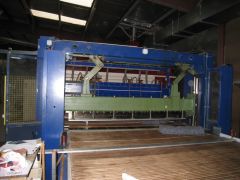 T-6391 GUILLOTINE CUTTING MACHINE FOR NON-WOVEN, WIDTH 2400mm, YEAR 1997 TO 1998
KNEE LEVER SCISSORS
Learn More
MAKE MOHR / FLEISSNER
CUTTING WIDTH: 2400mm
YEAR 1997 - EXCHANGE THE WHOLE CUTTING BARK AND BACKING KNIFES
YEAR 1998 - HYDRAULIC UNIT COMPLETELY NEW
YEAR 1998 - KNIFE BAR SYSTEM AND LOWER KNIFE COMPLETELY NEW
KNIFE BAR HAS TWO-SIDED HOLD DOWN WITH KNIFE GUIDE, KNIFE AND LOWER KNIFE AS NEW
HYDRAULIC CYLINDER SEAL KIT - NEW
HYDRAULIC OIL - NEW
MACHINE IS IN GOOD CONDITION
BLADE IS IN GOOD CONDITION
WE ARE CUTTING WOOL FLEECE UP TO 4000 GR/M² WITHOUT ANY PROBLEMS
POWER: 400 V, 50 HZ, 8.0 KW
SPACE REQUIREMENTS: L: 4250mm X B 1900mm X H 2600mm
THIS MACHINE IS AVAILABLE IMMEDIATELY -
 L-5737 LAUNDEROMETER
REFERENCE NUMBER: L-5737
LAUNDEROMETER
FOR ALL KINDS OF COTTON, WOOL, HEMP, SILK, CHEMICAL FIBER AND OTHER TEXTILES
STANDARDS: GB/T3921.1, GB/T3921.5, ISO105 D01, ISO105 C01, ISO105
C05, ISO105 D01, ISO105, BS1006, GB/T5711, JIS L 0844, JIS L 0860, AATCC 61
TOUCH SCREEN DISPLAY
QUANTITY: 1
Learn More