
Search results for: 'machine+can'
- Related search terms
- machine+can+0
-
 YY-3047 PP RAFFIA TWINE MACHINE LINE 1000KG PER 24 HOURSYY-3047 PP RAFFIA TWINE MACHINE LINE 1000KG PER 24 HOURS ASK FOR MORE DETAILS! QUANTITY: 1 Learn More
 -
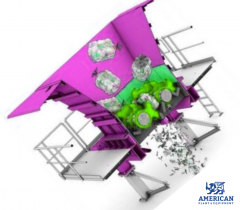 YY-2853 INNERSPRING SHREDDING MACHINE FOR MATTRESS CORE SHREDDING AND VOLUME REDUCINGYY-2853 INNERSPRING SHREDDING MACHINE FOR MATTRESS CORE SHREDDING AND VOLUME REDUCING WORKING PRINCIPLE OF THE FOUR SHAFT SHREDDER: THE FOUR SHAFT SHREDDER IS A SLOW RUNNING, HIGH TORQUE TWIN SHAFT CRUSHER. THE MATERIAL ENTERS THE INSIDE OF THE BOX THROUGH THE FEED SYSTEM AND HAS TWO ROTOR SHAFTS CARRIED ON THE BOX TO COLLECT IT, WHICH ALTERNATELY ROTATE INWARDS OR OUTWARDS. EACH SHAFT IS EQUIPPED WITH A ROW OF SPECIAL GEOMETRICAL SHREDDING BLADES. THE MATERIAL IS SHREDDED INTO SMALL PIECES BY THE COMBINED EFFECT OF SHEARING, SQUEEZING AND TEARING OF THE SHREDDING BLADES AND IS REMOVED FROM THE LOWER PART OF THE BOX. Learn More
 -
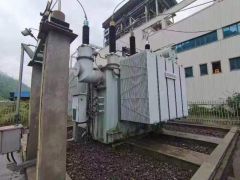 TT-2791 SIEMENS SST-400 STEAM TURBINE, 30MW, 10500V, 50HzTT-2791 SIEMENS SST-400 STEAM TURBINE, 30MW, 10500V, 50Hz QUANTITY: 1 Learn More
 -
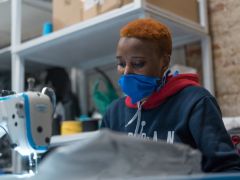 D-2388 What’s the Best Material for a Mask?
Federal health officials have now recommended that we cover our faces with fabric during the coronavirus pandemic. But what material offers the most protection?
The Centers for Disease Control and Prevention has posted a no-sew mask pattern using a bandanna and a coffee filter as well as a video on making masks using rubber bands and folded fabrics found at home.
While a simple face covering can reduce the spread of coronavirus by blocking outgoing germs from coughs or sneezes of an infected person, experts say there is more variation in how much homemade masks might protect the wearer from incoming germs, depending on the fit and quality of the material used.
Scientists around the country have taken it upon themselves to identify everyday materials that do a better job of filtering microscopic particles. In recent tests, HEPA furnace filters scored well, as did vacuum cleaner bags, layers of 600-count pillowcases and fabric similar to flannel pajamas. Stacked coffee filters had medium scores. Scarves and bandanna material had the lowest scores, but still captured a small percentage of particles.
If you don’t have any of the materials that were tested, a simple light test can help you decide whether a fabric is a good candidate for a mask.
“Hold it up to a bright light,” said Dr. Scott Segal, chairman of anesthesiology at Wake Forest Baptist Health who recently studied homemade masks. “If light passes really easily through the fibers and you can almost see the fibers, it’s not a good fabric. If it’s a denser weave of thicker material and light doesn’t pass through it as much, that’s the material you want to use.”
Researchers say it’s important to remember that lab studies are conducted under perfect conditions with no leaks or gaps in the mask, but the test methods give us a way to compare materials. And while the degree of filtration for some homemade masks seems low, most of us — who are staying home and practicing social distancing in public — don’t need the high level of protection required for medical workers. More important, any face covering is better than none, especially if worn by a person who has the virus but doesn’t know it.
The biggest challenge of choosing a homemade mask material is to find a fabric that is dense enough to capture viral particles, but breathable enough that we can actually wear it. Some items being touted online promise high filtration scores, but the material would be unwearable.
Dressing Up for Work … at Home
Yang Wang, an assistant professor of environmental engineering at Missouri University of Science and Technology, worked with his graduate students to study various combinations of layered materials — including both air filters and fabric. “You need something that is efficient for removing particles, but you also need to breathe,” said Dr. Wang, who last fall won an international award for aerosol research.To test everyday materials, scientists are using methods similar to those used to test medical masks, which everybody agrees should be saved for medical workers who are exposed to high doses of virus from seeing infected patients. The best medical mask — called the N95 respirator — filters out at least 95 percent of particles as small as 0.3 microns. By comparison, a typical surgical mask — made using a rectangular piece of pleated fabric with elastic ear loops — has a filtration efficiency ranging from 60 to 80 percent.
Dr. Wang’s group tested two types of air filters. An allergy-reduction HVAC filter worked the best, capturing 89 percent of particles with one layer and 94 percent with two layers. A furnace filter captured 75 percent with two layers, but required six layers to achieve 95 percent. To find a filter similar to those tested, look for a minimum efficiency reporting value (MERV) rating of 12 or higher or a microparticle performance rating of 1900 or higher.
The problem with air filters is that they potentially could shed small fibers that would be risky to inhale. So if you want to use a filter, you need to sandwich the filter between two layers of cotton fabric. Dr. Wang said one of his grad students made his own mask by following the instructions in the C.D.C. video, but adding several layers of filter material inside a bandanna.
Dr. Wang’s group also found that when certain common fabrics were used, two layers offered far less protection than four layers. A 600 thread count pillow case captured just 22 percent of particles when doubled, but four layers captured nearly 60 percent. A thick woolen yarn scarf filtered 21 percent of particles in two layers, and 48.8 percent in four layers. A 100 percent cotton bandanna did the worst, capturing only 18.2 percent when doubled, and just 19.5 percent in four layers.
The group also tested Brew Rite and Natural Brew basket-style coffee filters, which, when stacked in three layers, showed 40 to 50 percent filtration efficiency — but they were less breathable than other options.
If you are lucky enough to know a quilter, ask them to make you a mask. Tests performed at the Wake Forest Institute for Regenerative Medicine in Winston-Salem, N.C., showed good results for homemade masks using quilting fabric. Dr. Segal, of Wake Forest Baptist Health, who led the study, noted that quilters tend to use high-quality, high-thread count cotton. The best homemade masks in his study were as good as surgical masks or slightly better, testing in the range of 70 to 79 percent filtration. Homemade masks that used flimsier fabric tested as low as 1 percent filtration, Dr. Segal said.
The best-performing designs were a mask constructed of two layers of high-quality, heavyweight “quilter’s cotton,” a two-layer mask made with thick batik fabric, and a double-layer mask with an inner layer of flannel and outer layer of cotton.
Bonnie Browning, executive show director for the American Quilter’s Society, said that quilters prefer tightly woven cottons and batik fabrics that stand up over time. Ms. Browning said most sewing machines can handle only two layers of fabric when making a pleated mask, but someone who wanted four layers of protection could wear two masks at a time.
Ms. Browning said she recently reached out to quilters on Facebook and heard from 71 people who have made a combined total of nearly 15,000 masks. “We quilters are very much in the thick of what’s going on with this,” said Ms. Browning, who lives in Paducah, Ky. “One thing most of us have is a stash of fabric.”
People who don’t sew could try a folded origami mask, created by Jiangmei Wu, assistant professor of interior design at Indiana University. Ms. Wu, who is known for her breathtaking folded artwork, said she began designing a folded mask out of a medical and building material called Tyvek, as well as vacuum bags, after her brother in Hong Kong, where mask wearing is common, suggested it. (DuPont, the maker of Tyvek, said in a statement that Tyvek is intended for medical apparel, not masks.) The folded mask pattern is free online, as is a video demonstrating the folding process. In tests at Missouri University and University of Virginia, scientists found that vacuum bags removed between 60 percent and 87 percent of particles. But some brands of vacuum bags may contain fiberglass or are harder to breathe through than other materials, and shouldn’t be used. Ms. Wu used a bag by EnviroCare Technologies, which has said it does not use fiberglass in its paper and synthetic cloth bags.
“I wanted to create an alternative for people who don’t sew,” said Ms. Wu, who said she is talking to various groups to find other materials that will be effective in a folded mask. “Given the shortage of all kinds of materials, even vacuum bags might run out.”
The scientists who conducted the tests used a standard of 0.3 microns because that is the measure used by the National Institute for Occupational Safety and Health for medical masks.
Linsey Marr, a Virginia Tech aerosol scientist and an expert in the transmission of viruses, said the certification method for respirators and HEPA filters focuses on 0.3 microns because particles around that size are the hardest to catch. While it seems counterintuitive, particles smaller than 0.1 microns are actually easier to catch because they have a lot of random motion that makes them bump into the filter fibers, she said.
“Even though coronavirus is around 0.1 microns, it floats around in a wide range of sizes, from around 0.2 to several hundred microns, because people shed the virus in respiratory fluid droplets that also contain lots of salts and proteins and other things,” said Dr. Marr. “Even if the water in the droplets fully evaporates, there’s still a lot of salt and proteins and other gunk that stays behind as solid or gel-like material. I think 0.3 microns is still useful for guidance because the minimum filtration efficiency will be somewhere around this size, and it’s what NIOSH uses.”
Learn More -
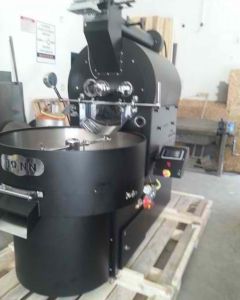 R-7055 NAZAR KAHVE GR30 PLC CONTROLLED COFFEE ROASTING MACHINE
R-7055 NAZAR KAHVE GR30 PLC CONTROLLED COFFEE ROASTING MACHINE
BRAND: NAZAR KAHVE
MODEL: GR30 PLC
PLC AND TOUCH OPERATOR PANEL CONTROL
- WIRELESS, ETHERNET, RS232, RS485 COMMUNICATION PORTS
- REMOTE CONNECTION AND CONTROL WITH WIRELESS COMMUNICATION
- WIRELESS CAN BE MONITORED AND CONTROLLED REMOTELY FROM ANY PHONE, TABLET OR COMPUTER WITH ANDROID, IPHONE, IPAD AND WINDOWS
- DATALOGGER FEATURE, TEMPERATURE AND TIME GRAPH CAN BE OBSERVED WHILE COFFEE IS ROASTED. HISTORICAL DATA RECORDS CAN BE SEEN
- AUTOMATIC OR MANUAL CONTROL POSSIBILITY. AUTOMATIC OPERATION ACCORDING TO TEMPERATURE GRAPH
- CAN CONNECT INTERNETE VIA ETHERNET. CAN BE MONITORED AND CONTROLLED FROM ANY POINT OVER THE INTERNETQUANTITY: 1
Learn More -
 R-7045 NAZAR KAHVE GR 5 PLC CONTROLLED COFFEE ROASTING MACHINE
R-7045 NAZAR KAHVE GR 5 PLC CONTROLLED COFFEE ROASTING MACHINE
BRAND: NAZAR KAHVE
MODEL: GR 5 PLC
PLC AND TOUCH OPERATOR PANEL CONTROL
- WIRELESS, ETHERNET, RS232, RS485 COMMUNICATION PORTS
- REMOTE CONNECTION AND CONTROL WITH WIRELESS COMMUNICATION.
- WIRELESS CAN BE MONITORED AND CONTROLLED REMOTELY FROM ANY PHONE, TABLET OR COMPUTER WITH ANDROID, IPHONE, IPAD AND WINDOWS.
- DATALOGGER FEATURE, TEMPERATURE AND TIME GRAPH CAN BE OBSERVED WHILE COFFEE IS ROASTED. HISTORICAL DATA RECORDS CAN BE SEEN.
- AUTOMATIC OR MANUAL CONTROL POSSIBILITY. AUTOMATIC OPERATION ACCORDING TO TEMPERATURE GRAPH.
- CAN CONNECT INTERNET VIA ETHERNET. CAN BE MONITORED AND CONTROLLED FROM ANY POINT OVER THE INTERNET.QUANTITY: 1
Learn More -
 M-2043 RING SPINNING PLANT YEAR 2000-2002 -17,000 SPINDLESREFERENCE NUMBER: M-2043 (77034YHEWA6RX) RING SPINNING PLANT YEAR 2000-2002 -17,000 SPINDLES QUANTITY AVAILABLE: 1 Learn More
 -
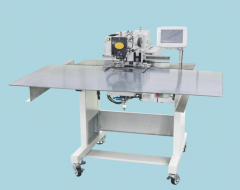 YY-2025 COMPUTERIZED PROGRAMMABLE PATTERN SEWING MACHINE FOR MOPSYY-2025 COMPUTERIZED PROGRAMMABLE PATTERN SEWING MACHINE FOR MOPS DETAILS: MOP PATTERN MACHINE IS A MODEL SPECIALLY DEVELOPED FOR THE PRODUCTION OF MOP AND CLEAN GOODS INDUSTRY. INCORPORATES AUTOMATIC WINDING MACHINE. THE DOUBLE HOOK CAN REACH ABOUT 60 METERS. THE BLADE CLAMPS THE THREAD HEAD AND PUTS THE BOBBIN TO AUTOMATICALLY WIND THE THREAD. THE WINDING IS EVEN AND THE YIELD RATE OF THE SEWN PRODUCT IS HIGH. QUANTITY: 1 Learn More
 -
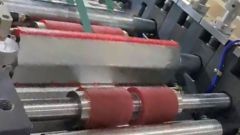 TT-3289 MASTER BAG 350 JD MAKING MACHINE, WIDTH 70 TO 250mm, YEAR 2023TT-3289 MASTER BAG 350 JD MAKING MACHINE, WIDTH 70 TO 250mm, YEAR 2023 BAG MAKING MODEL FLAT AND SATCHEL PAPER BAGS FS 1200 YEAR 2023 AVAILABILITY IMMEDIATELY QUANTITY: 1 Learn More
 -
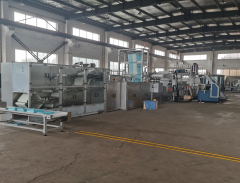 YY-2003 PET PAD MAKING MACHINE, 100 PADS PER MINUTEYY-2003 PET PAD MAKING MACHINE, 100 PADS PER MINUTE TECHNICAL PARAMETERS: 1. POWER SUPPLY: 380V/50Hz OR 220V 50/60Hz 2. POWER: 80KW (INCLUDE A HOT MELT GLUE MACHINE) 3. STABLE SPEED: 0 TO 50 METERS PER MINUTE(5 LAYERS) 4. DIMENSION: LENGTH 20000 X WIDTH 5000 X HEIGHT 3500mm 5. WEIGHT: 13T 6. YUNG PRESS: ≥0.6MPA 1.2M³/MIN 7. PRODUCTS’ SPECIFICATIONS: WIDTH(300 TO 600mm), LENGTH(400 TO 1000mm) 8. THE CORE SIZE: WIDTH(300 TO 500MM), LENGTH(400 TO 800mm) 9. SAP WEIGHT: 10 TO 50G/㎡ 10. WOODEN PULP WEIGHT: 40 TO 110G/㎡ 11. AUTOMATIC TENSION CONTROL 12. SINGLE SAP APPLICATOR 13. ABSORBENT CORE PREPARATION UNIT 14. ABSORBENT LAYER CROSS CUTTING UNIT 15. BACK SHEET APPLICATION AND EDGE FOLDING UNIT 16. HOT MELT GLUING UNIT 17. FINISHED PRODUCTS EMBOSSING UNIT 18. WIDTH FOLDING UNIT 19. FINISHED PRODUCTS CUTTING UNIT 20. LENGTH FOLDING UNIT DELIVERY TIME: 100 DAYS QUANTITY: 1 Learn More