
Search results for: 'Design Qualit'
- Related search terms
- Design
- Design Qualification
- design assist
- design generator
- design pressure
-
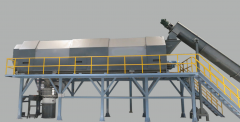 T-7018 LINE FOR PRODUCING 70 TO 150 DENIER FROM RECYCLED BOTTLEST-7018 LINE FOR PRODUCING 70 TO 150 DENIER FROM RECYCLED BOTTLES EXTRUDER Φ 160/25 PRODUCT TYPE PET-POY END/POSITION 12 ENDS POSITIONS 24 POSITIONS POSITION/SPINNING BEAM 2 POSITIONS/SPINNING BEAM POSITION DISTANCE (mm) 1500mm SPINNING PACK CYLINDER TYPE, BOTTOM MOUNTED SPINNERET DIAMETER (mm) Φ 90mm CROSS BLOWING AREA 1430mm X 1380mm GEAR PUMP SPECIFICATIONS (CC/REV) 12X3.0CC/REV GEAR PUMP QUANTITY/POSITION 1 OIL PUMP SPECIFICATION (CC/REV) 12X0.12CC/REV OIL PUMP QUANTITY/ POSITION 1 DOWTHERM BOILER/LINE 600L/65KW GUIDE ROLLER SYSTEM (DIAMETER X WIDTH) 160mm X 160mm MIGRATION JET AWA. JAPAN WINDER TWA1800-12ENDS Learn More
 -
 T-7066 MELTBLOWN NON-WOVEN PRODUCTION LINE- 1600mmT-7066 MELTBLOWN NON-WOVEN PRODUCTION LINE- 1600mm (1) EFFECTIVE WIDTH: 1600mm; (2) MAXIMUM COIL DIAMETER: 1200mm; (3) YIELD: 1.5 TO 2.0T /24 HOURS (20G/SQUARE); (4) FILAMENT SIZE: 2UM-5UM; (5) MAIN RAW MATERIALS: POLYPROPYLENE SLICING (MELTING AND SPRAYING SPECIAL MATERIALS) (6) PRODUCT WEIGHT: 15 TO 200G/M2. (7) MECHANICAL SPEED: 10 TO 80M/MIN; (8) INSTALLED CAPACITY: 450KW; (9) EQUIPMENT SIZE: 16000mm×6000mm×6000mm QUANTITY: 1 Learn More
 -
 D-2388 What’s the Best Material for a Mask?
Federal health officials have now recommended that we cover our faces with fabric during the coronavirus pandemic. But what material offers the most protection?
The Centers for Disease Control and Prevention has posted a no-sew mask pattern using a bandanna and a coffee filter as well as a video on making masks using rubber bands and folded fabrics found at home.
While a simple face covering can reduce the spread of coronavirus by blocking outgoing germs from coughs or sneezes of an infected person, experts say there is more variation in how much homemade masks might protect the wearer from incoming germs, depending on the fit and quality of the material used.
Scientists around the country have taken it upon themselves to identify everyday materials that do a better job of filtering microscopic particles. In recent tests, HEPA furnace filters scored well, as did vacuum cleaner bags, layers of 600-count pillowcases and fabric similar to flannel pajamas. Stacked coffee filters had medium scores. Scarves and bandanna material had the lowest scores, but still captured a small percentage of particles.
If you don’t have any of the materials that were tested, a simple light test can help you decide whether a fabric is a good candidate for a mask.
“Hold it up to a bright light,” said Dr. Scott Segal, chairman of anesthesiology at Wake Forest Baptist Health who recently studied homemade masks. “If light passes really easily through the fibers and you can almost see the fibers, it’s not a good fabric. If it’s a denser weave of thicker material and light doesn’t pass through it as much, that’s the material you want to use.”
Researchers say it’s important to remember that lab studies are conducted under perfect conditions with no leaks or gaps in the mask, but the test methods give us a way to compare materials. And while the degree of filtration for some homemade masks seems low, most of us — who are staying home and practicing social distancing in public — don’t need the high level of protection required for medical workers. More important, any face covering is better than none, especially if worn by a person who has the virus but doesn’t know it.
The biggest challenge of choosing a homemade mask material is to find a fabric that is dense enough to capture viral particles, but breathable enough that we can actually wear it. Some items being touted online promise high filtration scores, but the material would be unwearable.
Dressing Up for Work … at Home
Yang Wang, an assistant professor of environmental engineering at Missouri University of Science and Technology, worked with his graduate students to study various combinations of layered materials — including both air filters and fabric. “You need something that is efficient for removing particles, but you also need to breathe,” said Dr. Wang, who last fall won an international award for aerosol research.To test everyday materials, scientists are using methods similar to those used to test medical masks, which everybody agrees should be saved for medical workers who are exposed to high doses of virus from seeing infected patients. The best medical mask — called the N95 respirator — filters out at least 95 percent of particles as small as 0.3 microns. By comparison, a typical surgical mask — made using a rectangular piece of pleated fabric with elastic ear loops — has a filtration efficiency ranging from 60 to 80 percent.
Dr. Wang’s group tested two types of air filters. An allergy-reduction HVAC filter worked the best, capturing 89 percent of particles with one layer and 94 percent with two layers. A furnace filter captured 75 percent with two layers, but required six layers to achieve 95 percent. To find a filter similar to those tested, look for a minimum efficiency reporting value (MERV) rating of 12 or higher or a microparticle performance rating of 1900 or higher.
The problem with air filters is that they potentially could shed small fibers that would be risky to inhale. So if you want to use a filter, you need to sandwich the filter between two layers of cotton fabric. Dr. Wang said one of his grad students made his own mask by following the instructions in the C.D.C. video, but adding several layers of filter material inside a bandanna.
Dr. Wang’s group also found that when certain common fabrics were used, two layers offered far less protection than four layers. A 600 thread count pillow case captured just 22 percent of particles when doubled, but four layers captured nearly 60 percent. A thick woolen yarn scarf filtered 21 percent of particles in two layers, and 48.8 percent in four layers. A 100 percent cotton bandanna did the worst, capturing only 18.2 percent when doubled, and just 19.5 percent in four layers.
The group also tested Brew Rite and Natural Brew basket-style coffee filters, which, when stacked in three layers, showed 40 to 50 percent filtration efficiency — but they were less breathable than other options.
If you are lucky enough to know a quilter, ask them to make you a mask. Tests performed at the Wake Forest Institute for Regenerative Medicine in Winston-Salem, N.C., showed good results for homemade masks using quilting fabric. Dr. Segal, of Wake Forest Baptist Health, who led the study, noted that quilters tend to use high-quality, high-thread count cotton. The best homemade masks in his study were as good as surgical masks or slightly better, testing in the range of 70 to 79 percent filtration. Homemade masks that used flimsier fabric tested as low as 1 percent filtration, Dr. Segal said.
The best-performing designs were a mask constructed of two layers of high-quality, heavyweight “quilter’s cotton,” a two-layer mask made with thick batik fabric, and a double-layer mask with an inner layer of flannel and outer layer of cotton.
Bonnie Browning, executive show director for the American Quilter’s Society, said that quilters prefer tightly woven cottons and batik fabrics that stand up over time. Ms. Browning said most sewing machines can handle only two layers of fabric when making a pleated mask, but someone who wanted four layers of protection could wear two masks at a time.
Ms. Browning said she recently reached out to quilters on Facebook and heard from 71 people who have made a combined total of nearly 15,000 masks. “We quilters are very much in the thick of what’s going on with this,” said Ms. Browning, who lives in Paducah, Ky. “One thing most of us have is a stash of fabric.”
People who don’t sew could try a folded origami mask, created by Jiangmei Wu, assistant professor of interior design at Indiana University. Ms. Wu, who is known for her breathtaking folded artwork, said she began designing a folded mask out of a medical and building material called Tyvek, as well as vacuum bags, after her brother in Hong Kong, where mask wearing is common, suggested it. (DuPont, the maker of Tyvek, said in a statement that Tyvek is intended for medical apparel, not masks.) The folded mask pattern is free online, as is a video demonstrating the folding process. In tests at Missouri University and University of Virginia, scientists found that vacuum bags removed between 60 percent and 87 percent of particles. But some brands of vacuum bags may contain fiberglass or are harder to breathe through than other materials, and shouldn’t be used. Ms. Wu used a bag by EnviroCare Technologies, which has said it does not use fiberglass in its paper and synthetic cloth bags.
“I wanted to create an alternative for people who don’t sew,” said Ms. Wu, who said she is talking to various groups to find other materials that will be effective in a folded mask. “Given the shortage of all kinds of materials, even vacuum bags might run out.”
The scientists who conducted the tests used a standard of 0.3 microns because that is the measure used by the National Institute for Occupational Safety and Health for medical masks.
Linsey Marr, a Virginia Tech aerosol scientist and an expert in the transmission of viruses, said the certification method for respirators and HEPA filters focuses on 0.3 microns because particles around that size are the hardest to catch. While it seems counterintuitive, particles smaller than 0.1 microns are actually easier to catch because they have a lot of random motion that makes them bump into the filter fibers, she said.
“Even though coronavirus is around 0.1 microns, it floats around in a wide range of sizes, from around 0.2 to several hundred microns, because people shed the virus in respiratory fluid droplets that also contain lots of salts and proteins and other things,” said Dr. Marr. “Even if the water in the droplets fully evaporates, there’s still a lot of salt and proteins and other gunk that stays behind as solid or gel-like material. I think 0.3 microns is still useful for guidance because the minimum filtration efficiency will be somewhere around this size, and it’s what NIOSH uses.”
Learn More -
 P-4421 LAUNDRY SOAP PRODUCTION LINECAPACITY 1000 to 1500 KILOGRAMS PER HOUR
REFERENCE NUMBER: P-4421
VOLUME: 10m3SIZE:φ2800 x 3000, 20 m3POWER: 5.5 KILOWATTS PER SETLearn More -
 R-6854 BUHLER ROASTMASTER™20
R-6854 BUHLER ROASTMASTER™20
THE ROASTMASTER™20 BY BUHLER OFFERS EXACTLY WHAT START-UP BUSINESSES AND SMALL-SCALE INDUSTRIAL OPERATIONS REQUIRE TO PRODUCE TOP-QUALITY COFFEE. THE CAPACITY RANGES UP TO 70 KG OF GREEN BEANS PER HOUR. HOT AIR IS THE BEST CHOICE TO ENSURE A UNIFORM ROAST. ALL HOT AIR PASSES THROUGH THE ROTATING DRUM AND TRANSFERS ITS HEAT DIRECTLY TO THE BEANS IN A HOMOGENEOUS WAY. THIS HOT AIR PATHWAY ENSURES A HIGH PROPORTION OF CONVECTIVE HEAT TRANSFER RATHER THAN TO HEAT THE DRUM FROM BELOW. NO MATTER AT WHICH STAGE OF THE PROCESS, THE VARIABLE DRUM SPEED AND THE SOPHISTICATED INTERIOR DESIGN OF THE ROASTING CHAMBER DELIVER AN OPTIMAL BEAN DISTRIBUTION AND AN EFFICIENT INTERACTION OF THE BEANS WITH THE AIR. SILVERSKINS ARE SEPARATED IN THE CYCLONE. THE COMPACT DRUM ROASTER IS EQUIPPED WITH SEPARATE HEATING AND COOLING FANS WHICH ALLOW TO ROAST AND COOL AT THE SAME TIME. AN INNOVATIVE AND EASY-TO-USE PLC CONTROL SYSTEM ENSURES QUALITY CONSISTENCY DURING PRODUCTION BUT ALSO LEAVES ROOM FOR MANUAL INTERVENTION TO STEER THE PROCESSING WHEN NECESSARY.
ROASTMASTER™20. PROCESS FLEXIBILITY FOR YOUR FLAVOR SIGNATURE.
EACH COFFEE VARIETY IS UNIQUE BY NATURE AND REQUIRES INDIVIDUAL ROASTING CONDITIONS TO TRANSFORM THE FULL INTRINSIC FLAVOR POTENTIAL INTO GREAT FLAVOR. THE ROASTMASTER™20 IS EQUIPPED WITH A FULLY VARIABLE BURNER FOR FLEXIBLE ENERGY INPUT. THE FREQUENCY CONVERTER ON THE MAIN FAN ALLOWS FOR VARIABLE SPEED AND OPTIMIZED AIR-TO-BEAN-RATIO DURING THE DIFFERENT STAGES OF THE PROCESS. REGARDLESS WETHER YOU PREFER TRADITIONAL OR NON-CONVENTIONAL PROFILES, THE SOPHISTICATED MULTISTEP PROCESS CONTROL SOFTWARE INSPIRES PROFILE ROASTING FOR BEST FLAVOR GENERATION.DATA MANAGEMENT AND NEXT GENERATION CONNECTIVITY.
Learn More
THE FUTURE-SAFE CONCEPT INCLUDES AN EASY-TO-USE PLC CONTROL SYSTEM WITH INTEGRATED TOUCH PANEL, RECIPE MANAGEMENT, ONLINE TREND MONITORING, BATCH REPORT CREATION AND SAFETY FEATURES. MOREOVER THE EASY DATA EXPORT VIA USB PORT, ONLINE DATA TRANSFER TO EXTERNAL THIRD PARTY PROCESS MONITORING SOFTWARE AND REMOTE HMI VISUALIZATION AND PROCESS CONTROL ENSURE QUALITY CONSISTENCY DURING PRODUCTION. -
 SINGLE CHOCOLATE DEPOSITING LINEONE SHOT CHOCOLATE DEPOSITING LINE PLC CONTROL SYSTEM CHOCOLATE DEPOSITING HEAD TEN LAYER CHOCOLATE COOLING TUNNEL MOULD SIZES: 275 X 175 X 24mm 300 X 225 X 30mm 280 X 220 X 30mm 266 X 212 X 24mm SUGAR GRINDER (1 SET) DIMENSION (LXWXH)mm: 800 X 600 X 1360mm POWER(KW): 4 CAPACITY: 100~180KGS/H MAIN DRIVE SPEED: 4800RPM SMASHING FINENES: 20~1300 MESH WEIGHT: 200KG IMPACT SMASHING AFTER ENTERING THE PULVERIZING ROOM, MATERIAL IS IMPACTED BY SIX FAST ROTATING HAMMERS AND SMASHED THROUGH THE IMPACT BETWEEN THE MATERIAL AND THE TOOTH RING THE SMASHING FINENESS IS DECIDED BY THE SCREEN MESH IT IS SUITABLE FOR SMASHING GRANULATED SUGAR 200L FAT MELTING TANK (1 SET) DIMENSION (LXWXH)mm: Φ735 X 1100mm POWER(KW): 7.5 OIL MELTING CAPACITY: 2 X120=240KGS OIL MELTING TIME: 30~60MIN HEATING METHOD: STEAM AND POWER HEATING OIL MELTING TEMPERATURE: 40~65°C 500L CHOCOLATE CONCHE (4 SETS) DIMENSION (LXWXH)mm: 2000 X 1860 X 1280mm POWER(KW): 20 MAXIMUM CAPACITY: 500L FINENESS: 20~25UM MAIN DRIVE SPEED: 33RPM FINE MILLING TIME: 16~22H THESE REFINER/CONCHES ARE ESSENTIAL DURING CHOCOLATE PROCESSING, SUPPLIED OCMPLETE WITH MASTER CONTROL CONSOLE AND POWER ASSISTED PRESSURE CONTROL FOR INCREASING AND DECREASING OF PRESSURE. THE MACHINE IS FITTED WITH ITS OWN EXTRACT UNIT AND THE DELIVERY END IS FITTED WITH A SAMPLING VALVE AND TAKES OFF VALVE. THIS MACHINE WILL PRODUCE HIGH QUALITY MILK, DARK AND WHITE CHOCOLATES, PRALINES, TRUFFLES, COMPOUNDS AND MANY OTHER PRODUCTS. 500L CHOCOLATE WARM HOLDING TANK (4 SETS) DIMENSION (LXWXH)mm: Φ1035 X 1480mm POWER(KW): 8.6 MAXIMUM CAPACITY: 500L MAIN DRIVE SPEED: 22.5RPM MAIN MOTOR POWER: 1.1KW ELECTRICAL HEATING POWER: 5KW HEAT HOLDING POWER: 2.5KW WEIGHT: 515KG CHOCOLATE ROTOR PUMP (2 SETS) DIMENSION (LXWXH)mm: 800 X 390 X 350mm POWER(KW): 1.5 MODEL: SJB35 CAQPACITY: 35 LITER/MIN DELIVERY LIFT: 8M MAIN DRIVE SPEED: 165~300RPM CALIBER: 40mm CHOCOLATE BALL MILL CHOCOLATE DEPOSITOR ONE SHOT CHOCOLATE DEPOSITING LINE (1 SET) DIMENSION (LXWXH)mm: 16000 X 1200 X 2150mm POWER(KW): 18 OND CHOCOLATE DEPOSITOR, TWO HOPPERS PRODUCTION CAPACITRY: 1~2T/8H DEPOSITING SPEED: 8-10 TIMES/MIN REFRIGERATOR’S CAPACITY: 15,000-21,800KCAL/H SPECIAL FOR CHOCOLATE POURING AND DEPOSITING CONTROLLED BY MECHANICAL AND ELECTRICAL SYSTEM PRODUCTION UNIT INCLUDES MOULD HEATING, POURING, VIBRATING, COOLING, DISCHARGING, AND CONVEYING WITH AUTOMATIC OPERATION FOR PRODUCING PURE CHOCOLATE, CENTER FILLING CHOCOLATE OR COMPOUND, DOUBLE COLORS CHOCOLATE, AND GRANULE MIXED CHOCOLATE, ETC. WITH SMOOTH AND BEAUTIFUL SURFACE, ACCURATE WEIGHT – IDEAL FOR HIGH QUALITY CHOCOLATE ONE CHOCOLATE MOULDS HEATING ONE SHOT CHOCOLATE DEPOSITOR CHOCOLATE VIBRATING TEN LAYER CHOCOLATE COOLING TUNNEL PLC CONTROL SYSTEM (TAIWAN BREAD) CHOCOLATE MOULDS (200 PCS) DIMENSION (LXWXH)mm: 300 X 225 X 30mm (CAN BE CHANGED BY CUSTOMER’S NEEDS) 250L CHOCOLATE TEMPERING MACHINE ( 1 SET) DIMENSION (LXWXH)mm: 950 X 850 X 1600mm POWER(KW): 12 CAPACITY: 200L TO 350L/H TEMPERING RANGE: 27°C TO 40°C HOT WATER PUMP: 95KW CHOCOLATE LIQUOR PRESSURE: 2MPA WATER PRESSURE: 2.3MPA WEIGHT: 1300KG PLC CONTROLLED FULLY AUTOMATIC CHOCOLATE CONTINUOUS TEMPERING MACHINE WHICH IS CENTRALLY CONTROLLED BY AN ELECTRONIC TEMPERATURE REGULATOR AND AN ELECTROMAGNETIC ON/OFF VALVE TO MAINTAIN THE HIGH QUALITY AND SUPER SURFACE GLOSS OF THE CHOCOLATES. IN ADDITION TO A CHOCOLATE STORAGE TANK, FEEDING PUMP, AND A YX TEMPERING MACHINE WHICH CAN ENSURE THE DE-CRYSTALLIZATION AND CONSTANT TEMPERATURE IN FEED OF CHOCOLATE MASS. TWJ IS DESIGNED FOR THE APPLICATIONS SUCH AS MOULDING AND ENROBING IN WHICH THE EXCESS MASS CAN BE RETURNED TO THE TEMPERING MACHINE. CONNECTING PIPES AND VALVES (SS) Learn More
 -
 TT-7280 GAI BOTTLING LINE FOR STILL WINE UP TO 1000 BPH, YEAR 1999TT-7280 GAI BOTTLING LINE FOR STILL WINE UP TO 1000 BPH, YEAR 1999 1. BRAND: GAI 2. YEAR: 1999 3. SPEED: 1000 BPH 4. PRODUCTS: WINE (STILL) 5. FORMATS: 0.33 L, 1.0 L 6. SAFETY FEATURES: YES 7. FILL TYPE: GRAVITY/LIGHT DEPRESSION 8. USED Learn More
 -
 TT-6302 TETRA PAK FILLING LINE TBA 19 200ML SLIM 10V, YEAR 2003TT-6302 TETRA PAK FILLING LINE TBA 19 200ML SLIM 10V, YEAR 2003 1. TETRA PAK BOTTLING PLANT 2. YEAR OF CONSTRUCTION 2003 3. CONDITION USED 4. OPERATING HOURS: 38,750 H QUANTITY: 1 Learn More
 -
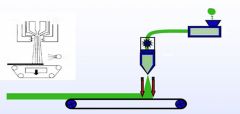
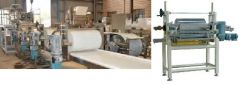 M-7873 CHOCOLATE CEREAL AND GRANOLA BAR AUTOMATIC LINE
REFERENCE NUMBER: M-7873
CHOCOLATE CEREAL AND GRANOLA BAR AUTOMATIC LINE
AUTOMATIC LINE
FOR CHOCOLATE CEREAL AND GRANOLA BARS
AUTOMATIC COMBINATION BETWEEN THE FREEZING, FORMING, AND PRESSING ROLLERS, AND THE SLITTING TECHNOLOGY.
THIS PRODUCING LINE IS A MULTI-FUNCTION LINE WHICH CONSISTS OF KITCHEN EQUIPMENTS, FORMING AND SHEETING SYSTEM, NUTS SPRINKLING SYSTEM, FORMING AND PRESSING ROLLER, REFRIGERATION SYSTEM, COOLING TUNNEL, CANDY BAR SLITTING, CUTTING AND CONVEYING SYSTEM, AND CHOCOLATE ENROBING MACHINE, ETC.
THIS LINE TAKES THE PLACE OF THE TRADITIONAL, MANUAL WORKSHOP PRODUCTION WITH FULL AUTOMATIC MACHINERY PRODUCTION. THIS LINE WILL BE IDEAL FOR THE CANDY BAR LEISURE FOOD INDUSTRY, WITH MODERN AND LARGE QUANTITY PRODUCTION.
Learn More -
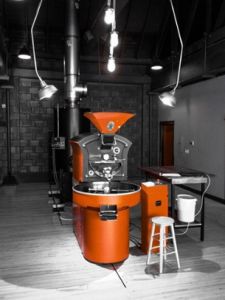 R-3250 GIESEN COFFEE ROASTER AND SELKIRK OXIDIZER - 15 KILOS
R-3250 GIESEN COFFEE ROASTER AND SELKIRK OXIDIZER - 15 KILOS
AN EXCEPTIONAL OPPORTUNITY FOR READY TO BE DELIVERED/INSTALLED EQUIPMENT CREATED BY A CHANGED BUSINESS MODEL.
GIESEN W15A
DOUBLE EXHAUST/ROAST PROFILE SYSTEM
NATURAL GAS
240V/60 HZ
COLOR: RED
AVAILABLE WITH SELKIRK TO-2CS321 THERMAL OXIDIZER (USED)GIESEN BROCHURE
SPECIFICATIONS:
GIESEN W15A
CAPACITY: 500 GRAM - 15 KG GREEN BEANS / PER BATCH / M. 60 KG/H
DRIVES: DIRECT FREQUENCY DRIVE MOTOR. ADJUSTABLE DRUM SPEED CONTROL AND ADJUSTABLE ROAST FAN SPEED CONTROL.
ROAST DRUM: DIGITAL PRESSION CONTROL. CAST IRON DRUM WITH HIGH PERFORMANCE BEARINGS.
HEATING SYSTEM: GAS BURNER BY PROPANE GAS (LPG, BOTTLE GAS) OR CITY GAS.
VOLTAGE: 1 PHASE 230V / 50-60 HZ
PAINTING: FREE CHOICE AND CUSTOMIZED / RAL CODES
ROAST ROOF: FREE CHOICE AND CUSTOMIZED
DIMENSIONS: LENGTH 1900mm X WIDTH 962mm X HEIGHT 2000mm
EXHAUST PIPE: EXHAUST PIPE DIAMETER FOR ROAST AIR: ∅ 200mmTHERMAL OXIDIZER FOR GIESEN W15 ROASTER
SELKIRK SPECIALIZES IN THERMAL AFTERBURNERS FOR COFFEE ROASTING MACHINES FROM 10 TO 120 KGS PER BATCH. AFTERBURNERS ARE DESIGNED OF QUALITY MATERIALS FOR LONG SERVICE LIFE. INTEGRATED EFFICIENT GAS BURNERS WHICH REDUCE OPERATING COSTS. BURNER CONFORMS TO UL 295 STANDARD FOR COMMERCIAL/INDUSTRIAL GAS BURNERS. AFTERBURNER DESIGN PROVIDES LONG RETENTION TIMES TO ELIMINATE SMOKE AND ODORS FROM THE ROASTING PROCESS. STANDARD AFTERBURNER OPERATING TEMPERATURE IS 1250 F, BUT CAN EASILY BE ADJUSTED TO MEET LOCAL AIR QUALITY REQUIREMENTS. GAS BURNER IS COMPLETELY SELF MODULATING, AND OPERATOR CONTROLS ARE DESIGNED FOR EASE OF USE.OXIDIZER SPECIFICATIONS:
TO-2CS321 THERMAL OXIDIZER WITH THE FOLLOWING DESIGN FEATURES:
WAYNE COMBUSTION LC 1500 BURNER WITH 1.5 MILLION BTU PER HOUR MAXIMUM INPUT.
DUNGS MULTIBLOC SAFETY VALVE MBC VEF 2500.
DUNGS LOW AND HIGH GAS PRESSURE SWITCHES.
SIEMENS LME SERIES FLAME SAFETY CONTROLLER.
FLAME SENSING ROD FOR FLAME VERIFICATION.
FULLY MODULATING TO MODULATE AT PRE-SET OPERATING TEMPERATURE;
BURNER AND CONTROLS CONFORM TO UL 295 STANDARD FOR COMMERCIAL INDUSTRIAL GAS HEATING EQUIPMENT.
OPERATOR FRIENDLY CONTROL SYSTEM.
TO-2CS321 DIMENSIONS:
OUTSIDE DIAMETER: 36"
OVERALL HEIGHT FROM FLOOR: 82"
INLET DIAMETER: 6"
OUTLET DIAMETER: 10"
EXTERIOR TO BE POWDERCOATED CARBON STEEL MATTE BLACK (OPTIONAL COLORS AVAILABLE).
4" OF HIGH DENSITY CERAMIC INSULATION BETWEEN INTERIOR AND EXTERIOR SURFACES.QUANTITY: 1
Learn More